Youth Engagement
2025 Annual Report
Protection Makes Peace Possible
Civilian protection is not simply one priority among many. It is the foundation upon which recovery, resilience and lasting peace are built. It is this conviction that has guided Nonviolent Peaceforce since our founding. And in 2025, it was tested as never before.
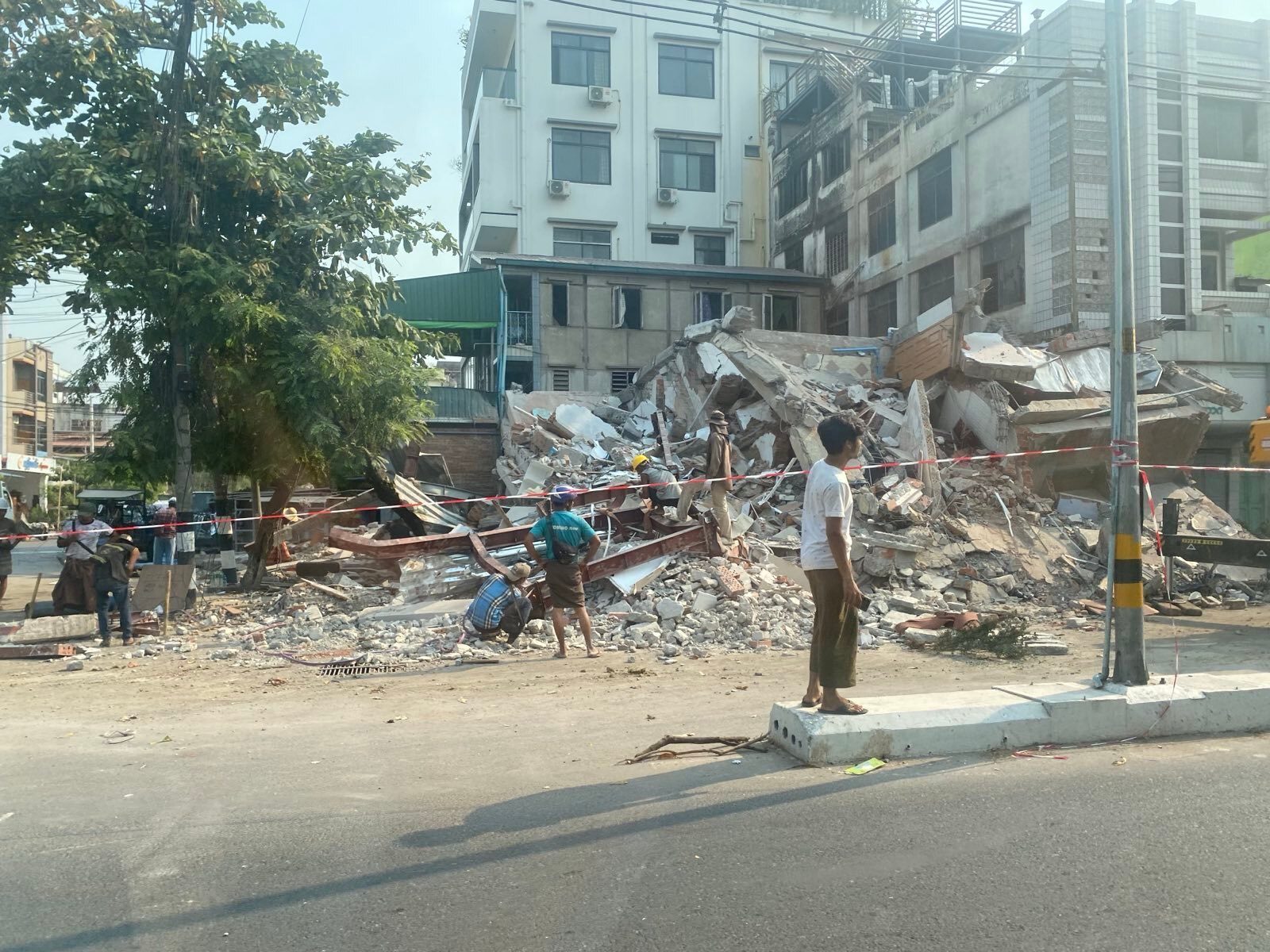
Myanmar earthquake destruction. 2025.
1,146
people relocated to safer areas after the 7.7 magnitude earthquake struck Myanmar on March 28
61
psychological support sessions completed
people reached in psychological support sessions
348
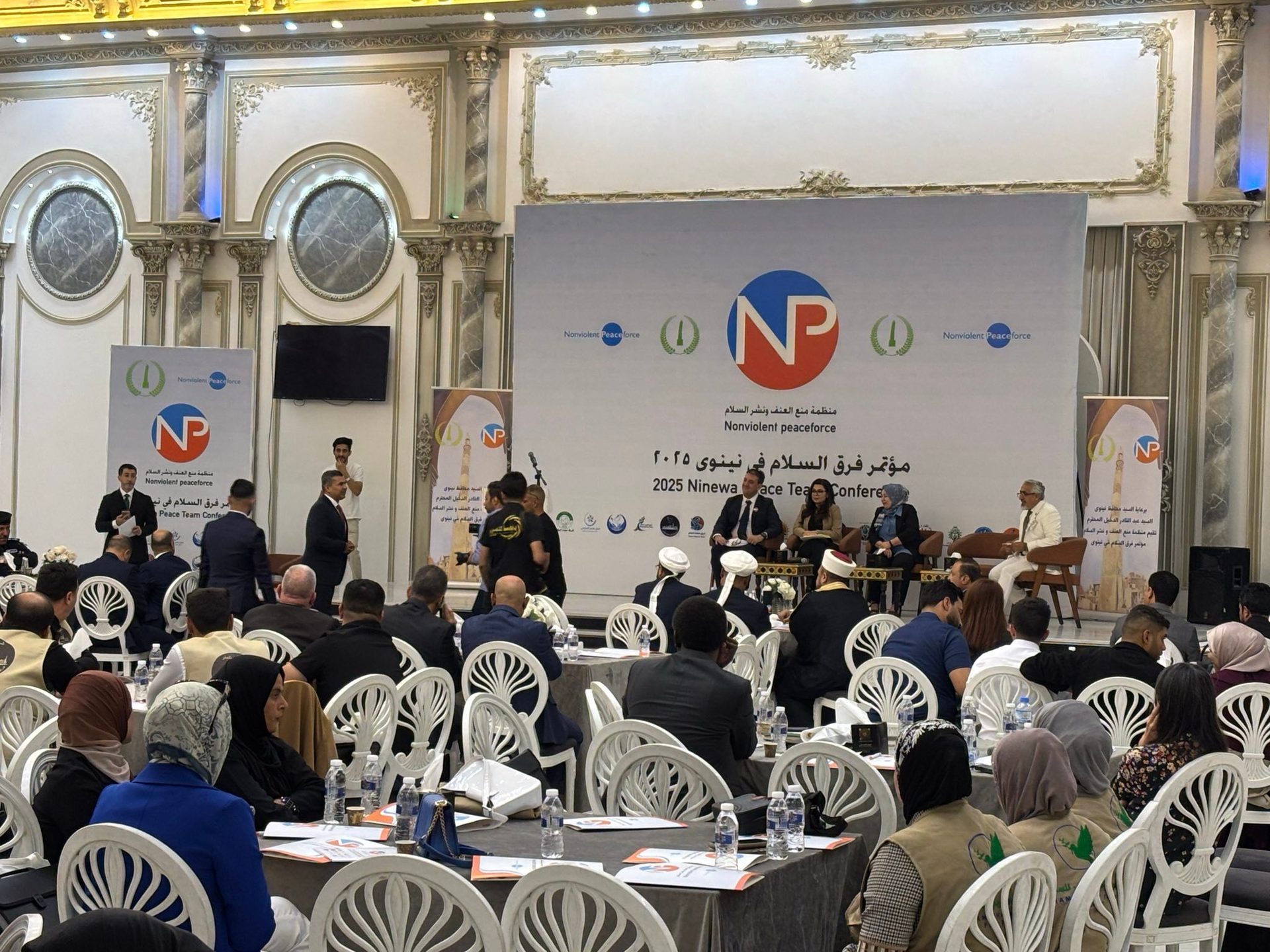
Ninewa Peace Team Conference. 2025.
6
Community Peace Teams in Iraq volunteering to enhance community peace and civilian protection
55
male members
female members
48
13,800
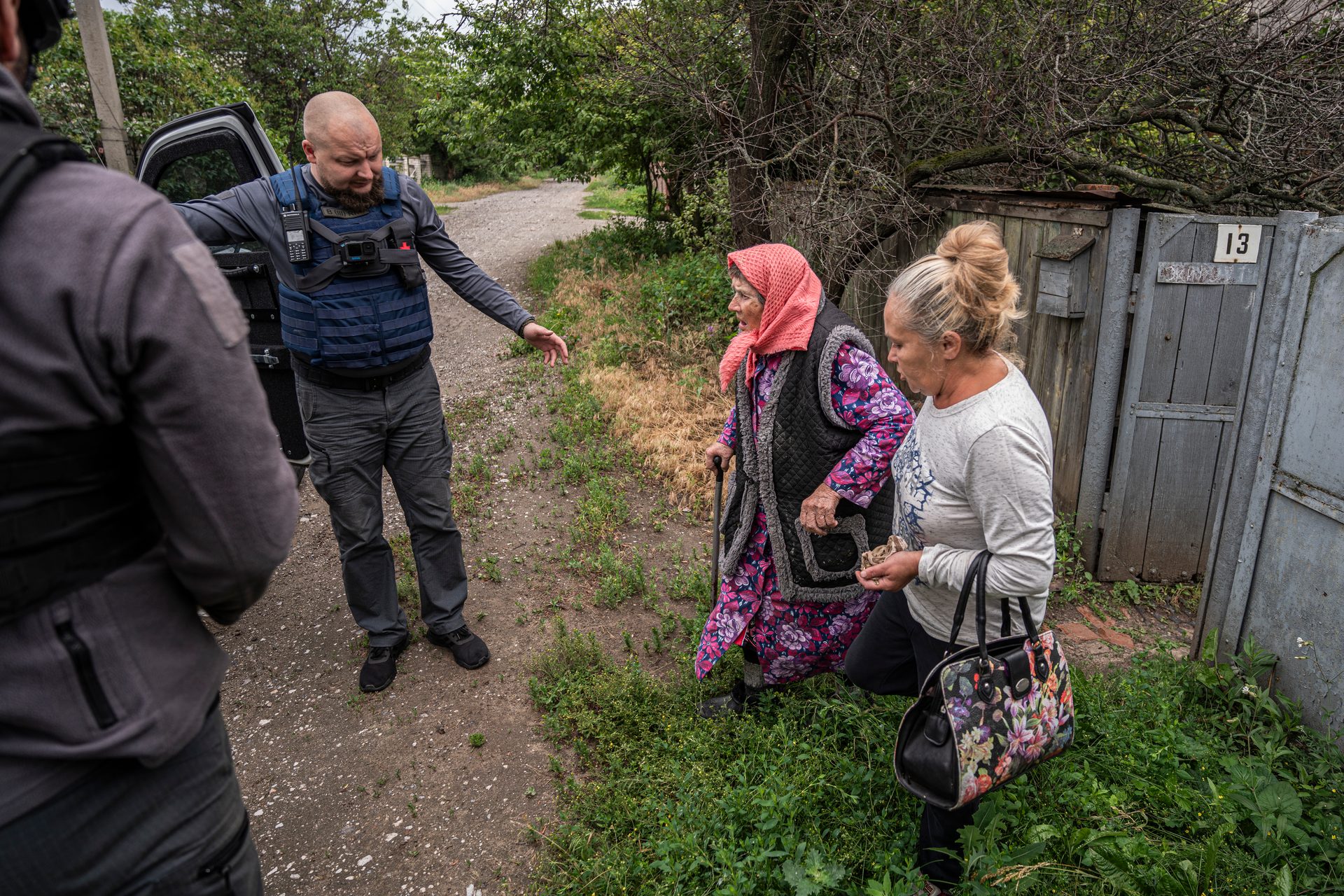
conflicted affected people in Ukraine reached through direct interventions
12%
persons with disabilities represented
Two women evacuated in Kupiansk, Kharkiv region. July 3, 2025.07. [Seth Scott, RCC]
Explore Our Impact
In an increasingly uncertain world, we believe that investing in civilian protection is one of the most practical and effective ways to reduce suffering, strengthen resilience, and create the conditions in which peace can take root. Protecting civilians is not only about responding to violence today; it is about enabling communities to shape a more peaceful tomorrow.
This annual report is a testament to the courage and leadership of the communities we accompany, the commitment of our staff and partners, and the trust placed in us by those who support this work.
Double-click to select video
Reflecting on 2025
A video message from Tiffany Easthom, NP Executive Director, and Deepa Sureka, NP Board Chair.
2025 Protection Trends Report
Contemporary conflicts are increasingly fought in civilian spaces. Read how communities are being put at greater risk and how civilians continue to act with agency to protect themselves and one another.
At Nonviolent Peaceforce (NP), we remain unwavering in our mission to protect civilians in violent conflicts through unarmed strategies, build peace side-by-side with local communities, and advocate for the wider adoption of these approaches to safeguard human lives and dignity.
Our evidence-informed, civilian-led approaches have protected tens of thousands of people around the world since our launch in 2002 — impacting millions more and helping communities live free from fear and become equipped to protect themselves and create sustainable peace.
Who We Are
Advocacy is central to how we protect civilians and promote nonviolence—bridging the gap between our work on the ground and the decisions made by governments and global institutions.
Through public messaging and direct engagement with decision makers, we shift the policies and narratives that shape civilian safety. We influence local and global leaders to use civilian-led and nonviolent approaches to protection, instead of force and violence.
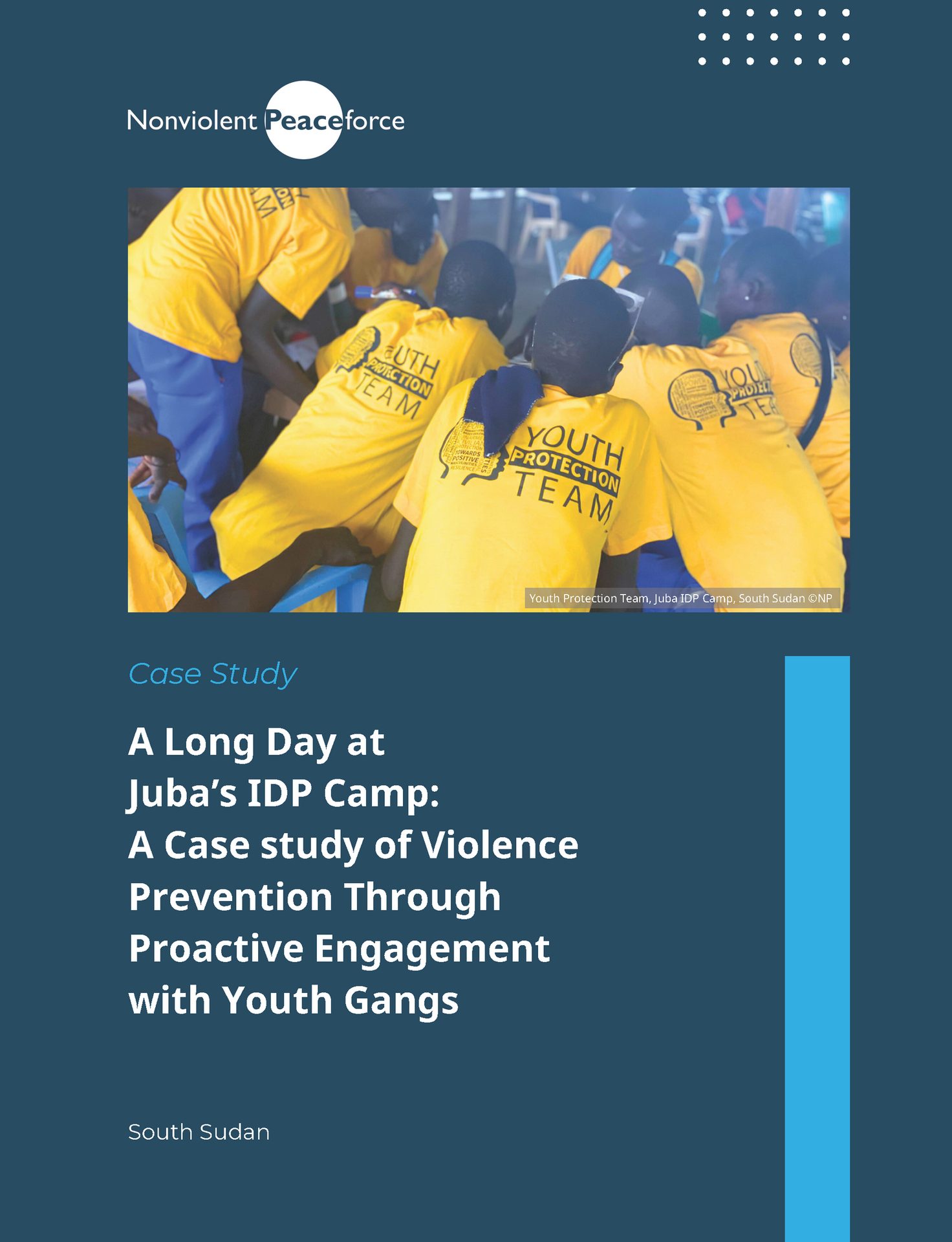
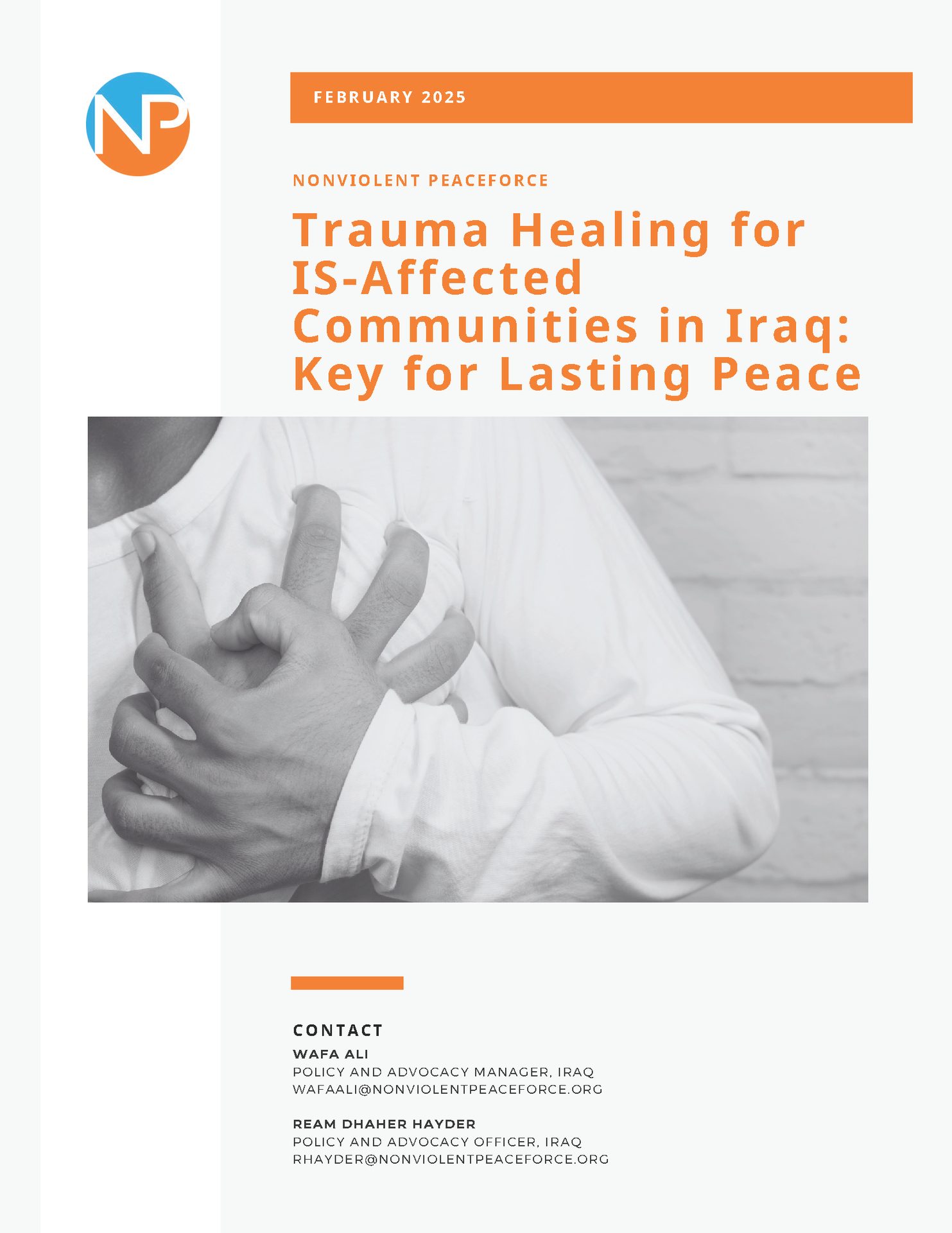
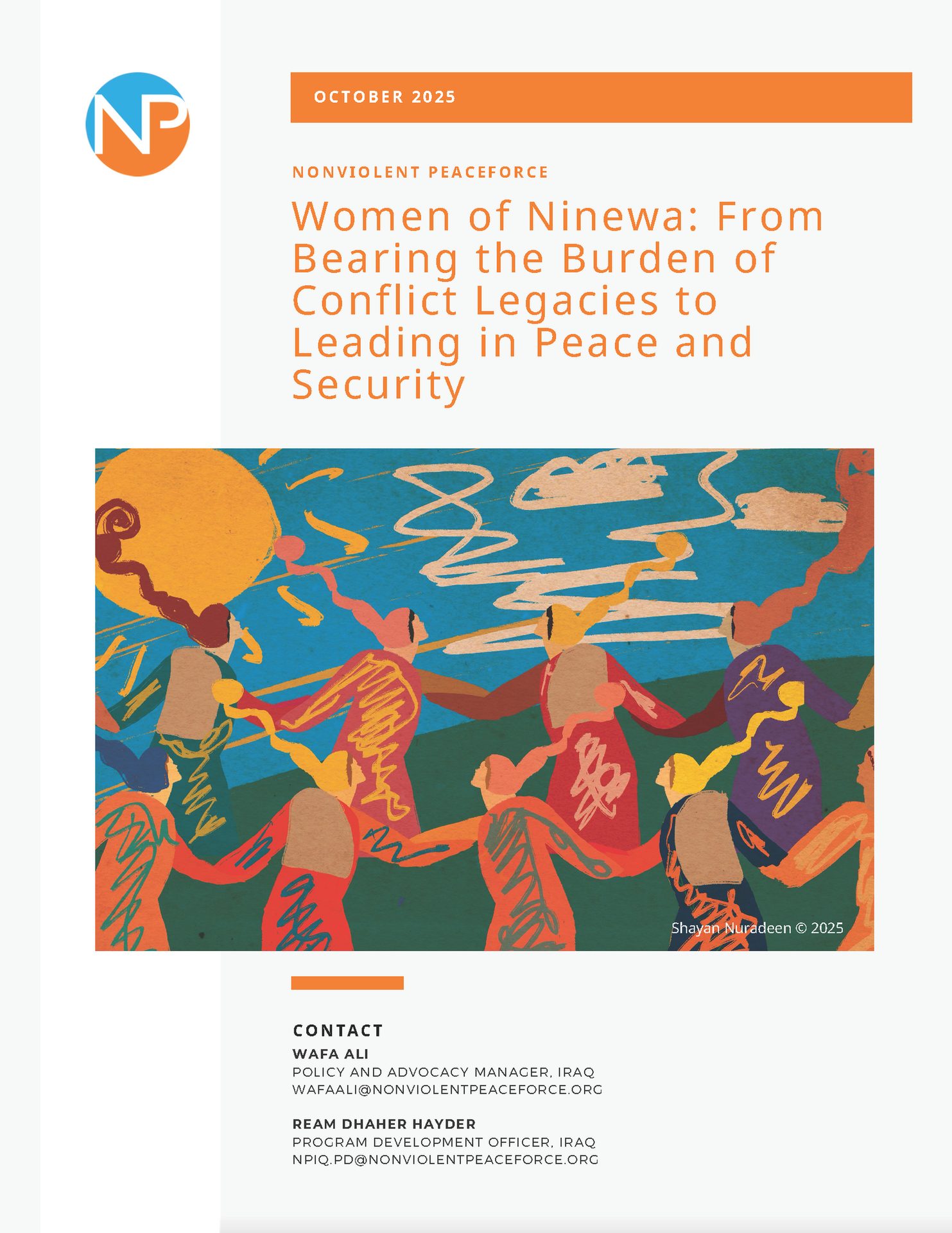
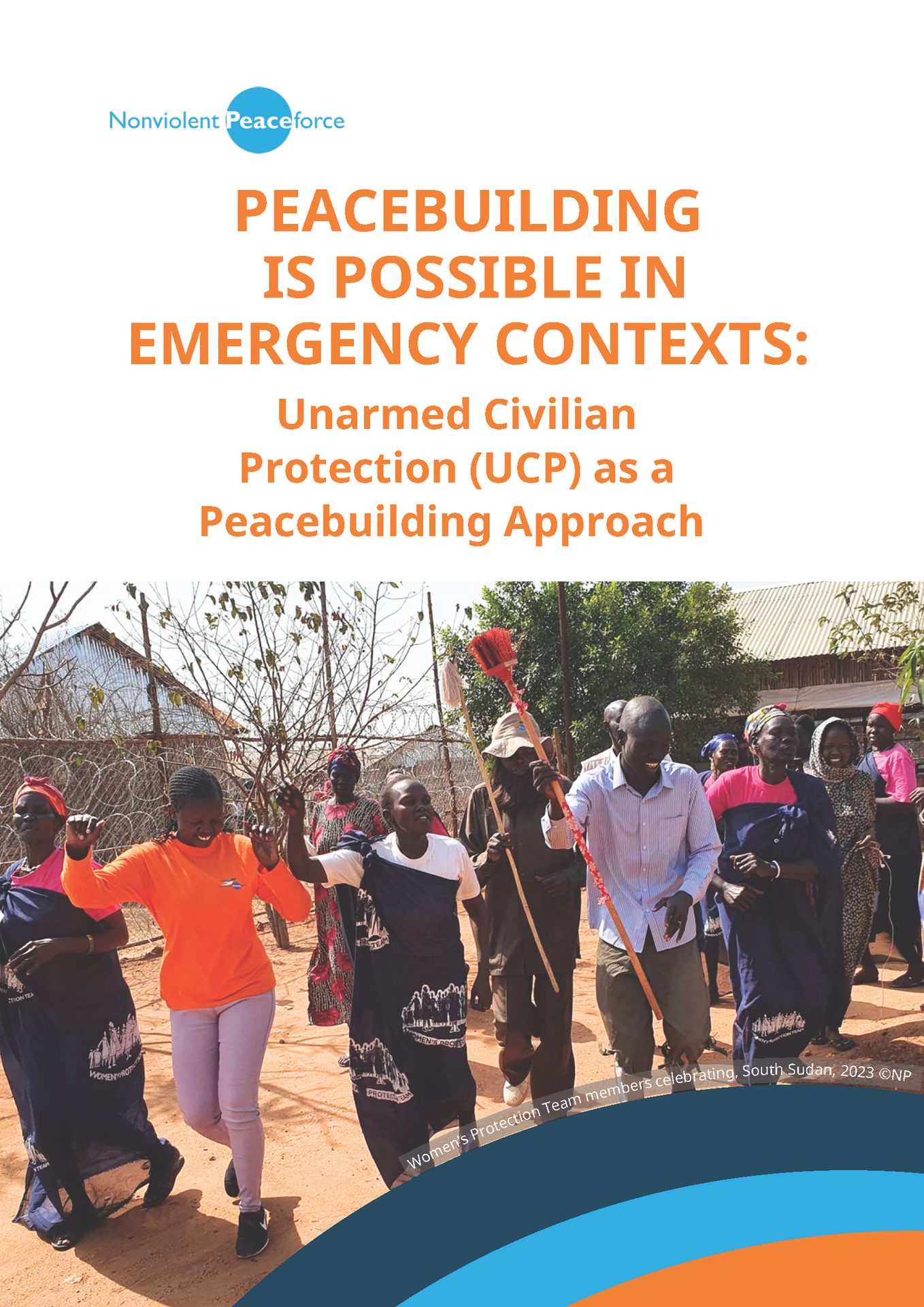
Our reports, case studies, and alerts provide a window into the realities communities face—and the solutions they are building. From peacebuilding in emergencies, to engaging youth and women, to confronting digital harms, climate-related conflict, and trauma healing, our work brings attention to the most urgent issues affecting civilian lives.
Connecting practice to policy shifts power
ADVOCACY
Advocacy isn't abstract. It is connecting frontline practice with global policy to redefine how peace and security are built.
Rosemary, Najat, and Basheer give us three examples of this in action — voices that carry the weight of frontline experience into the rooms where policy is shaped.
2025
If this past year has shown us anything, it’s this: No one is coming to save us — but no one has to face it alone. Our strength is solidarity. Our power is in collective action.
Protection makes peace possible
annual Report
A message from Tiffany Easthom, Executive Director, and Deepa Sureka, Board Chair.
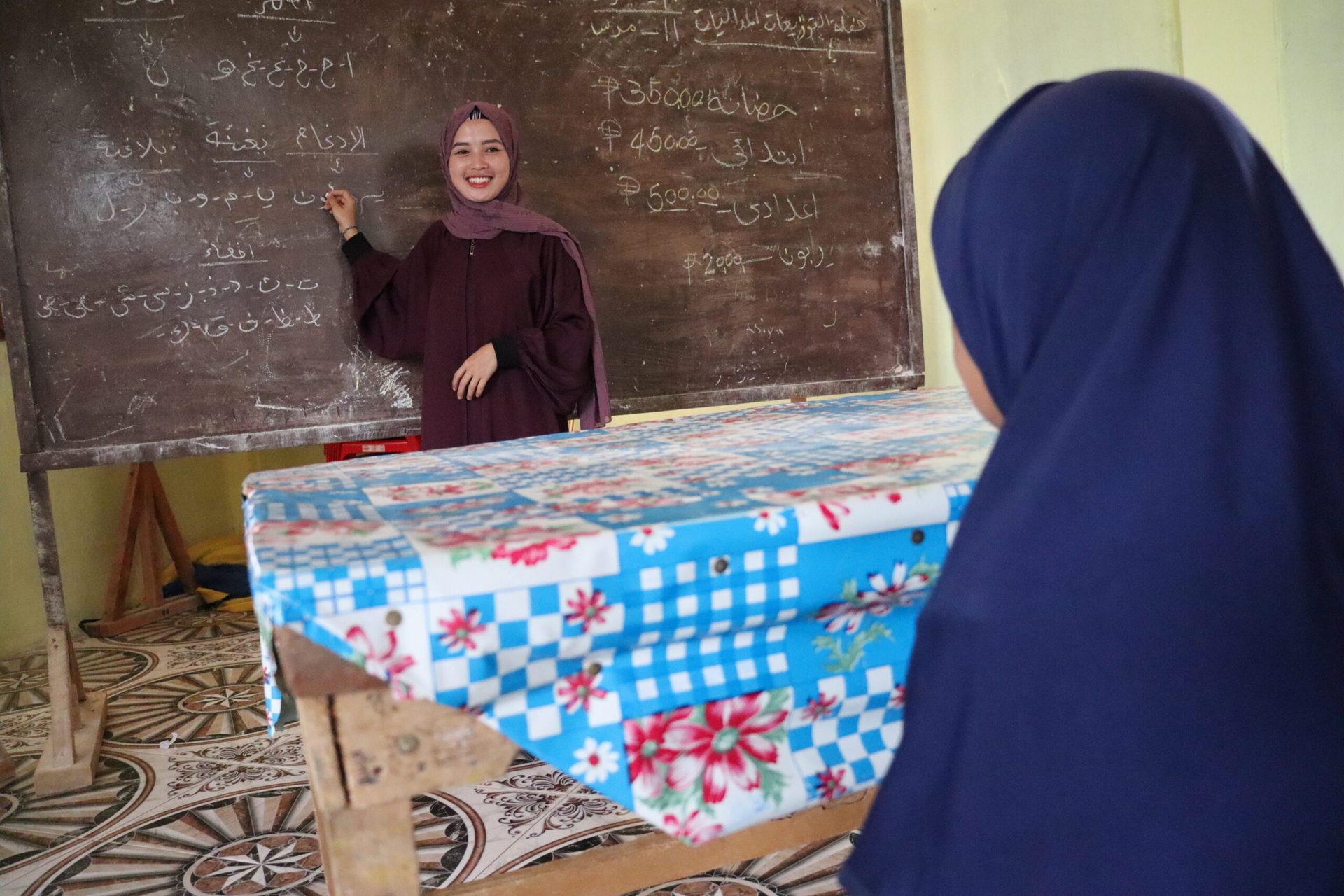
Header Image: Najah Untong, a 25-year-old teacher, Early Warning Early Response monitor and Youth Representative. Bangsamoro Autonomous Region, Philippines. 2024. © NP.
Change is shaped boldly in community.
advocacy
Advocacy is central to how we protect civilians and promote nonviolence—bridging the gap between our work on the ground and the decisions made by governments and global institutions.
Through public messaging and direct engagement with decisionmakers, we work to shift the policies and narratives that shape civilian safety.
Our reports, case studies, and alerts provide a window into the realities communities face—and the solutions they are building. From peacebuilding in emergencies, to engaging youth and women, to confronting digital harms, climate-related conflict, and trauma healing, our publications spotlight the most urgent issues affecting civilian lives.
Advocacy isn't abstract. It is connecting frontline practice with global policy to redefine how peace and security are built.
Rosemary, Najat, and Basheer give us three examples of this in action — voices that carry the weight of frontline experience into the rooms where policy is shaped.
access to resources
shifts power.
UCP Academy
Communities have always found ways to protect themselves. The UCP Academy strengthens that — connecting local knowledge and practice to a global body of expertise, resources, and peers working toward the same goal. Launched in partnership with Creating Safer Space and built in collaboration with partners who share our vision of protection without violence, the Academy offers a growing resource library, practical courses, and a Changemakers programme that pairs training with mentorship and micro-grants. A global hub, built on the conviction that the people closest to violence are those who hold the key to interrupting it.
Communities have always found ways to protect themselves. The UCP Academy strengthens that—connecting local knowledge and practice to a global body of expertise, resources, and peers working toward the same goal. Built in collaboration with partners who share our vision of protection without violence, the Academy offers a growing resource library and practical courses for people anywhere in the world to deepen their practice of unarmed civilian protection.
Access to resources shifts power
UCP ACADEMY
In 2025 we also launched a Changemakers programme—providing 20 local leaders for peace around the world with training, mentorship, and the opportunity for micro-grants—seeding protection projects around the world. The UCP Academy is a global hub built on the conviction that the people closest to violence are those who hold the key to interrupting it.
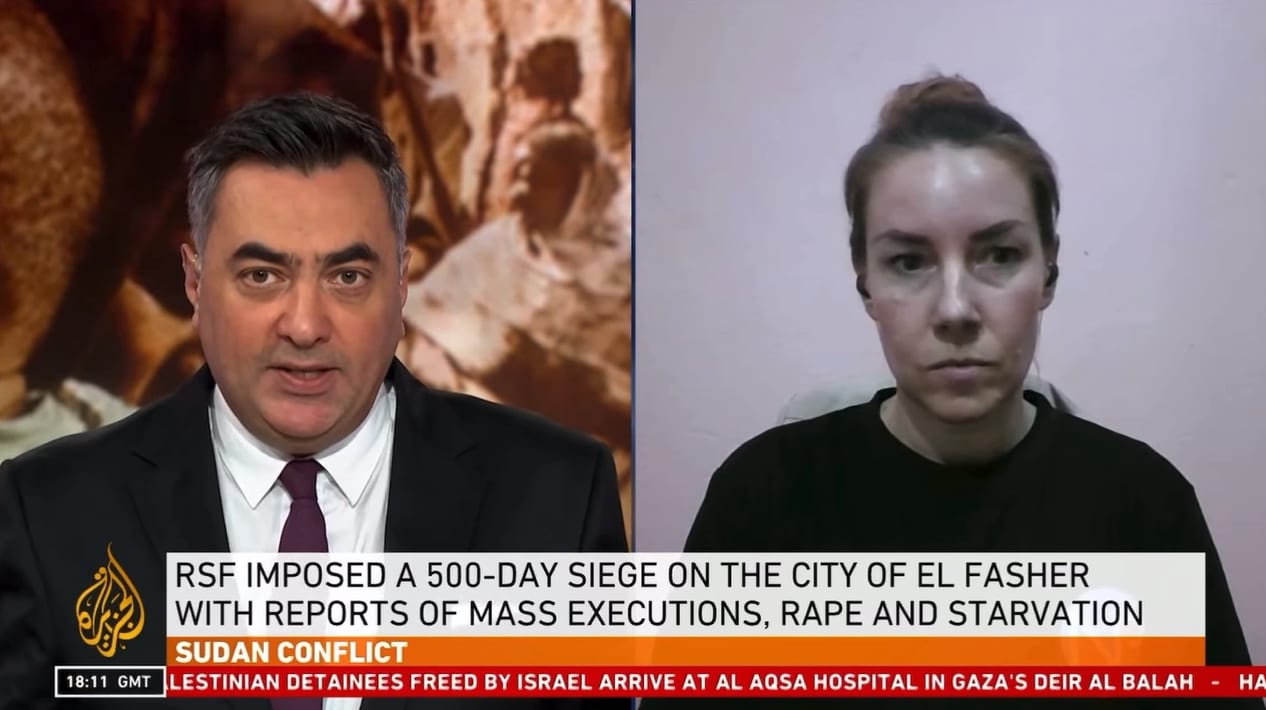
After an 18-month siege, El Fasher fell to the Rapid Support Forces in October 2025. While protection needs soared as thousands were forced to flee their homes, local protection leaders refused to stop their work: rebuilding community protection systems through displacement and addressing longstanding conflicts exacerbated by civil war.
Protection Continues, Even in Crisis
SUDAN
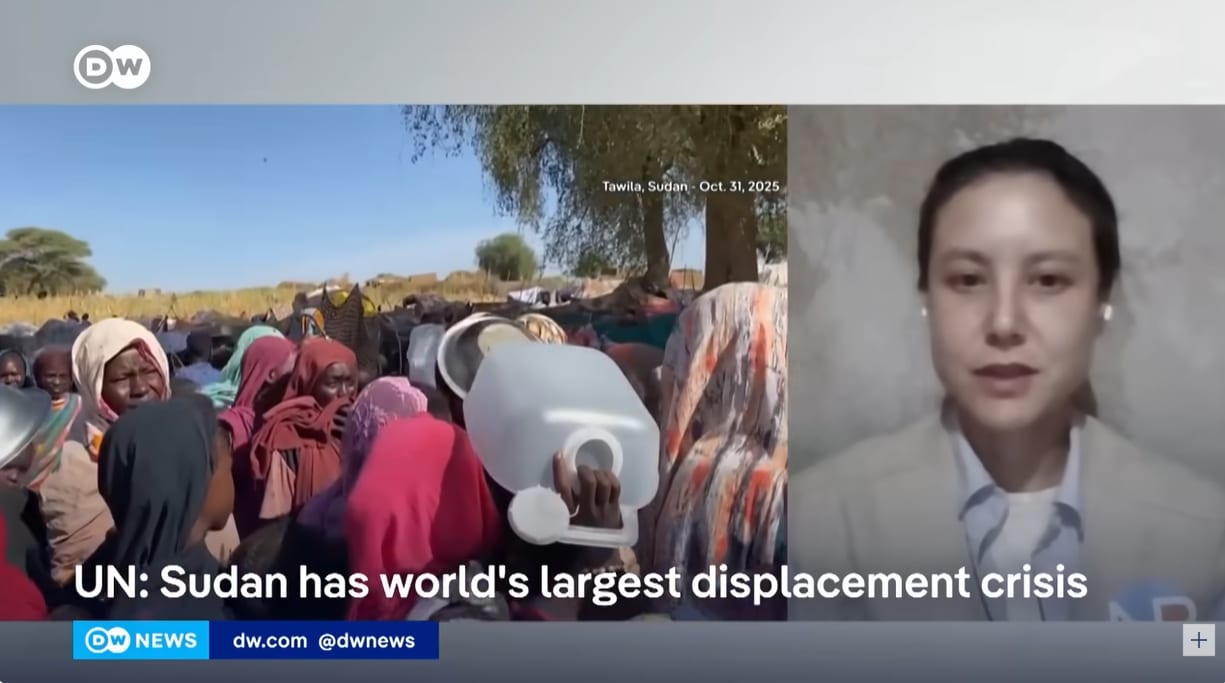
By amplifying the experiences of affected communities, NP helped ensure that civilians were not forgotten amid one of the world's largest displacement crises.
In the months leading up to El Fasher’s collapse, NP warned of an impending civilian catastrophe and called for urgent international action. As conditions deteriorated, NP staff and Women Protection Team members documented protection risks and raised awareness about the unfolding humanitarian crisis and intense fighting that left civilians trapped, displaced, injured, or killed.
Speaking with Al Jazeera, NP Sudan Technical Protection Advisor Mary Brace shared:
The last months have been absolutely harrowing: people talking about the extreme fear of constant bombardment, the extremely limited food that was available, people eating cow hides because there was nothing else to eat. And extremely limited medical supply. I spoke to one man who had 5 pieces of shrapnel in his body that he had sustained over the previous weeks that were still lodged there.
"
Sounding the Alarm
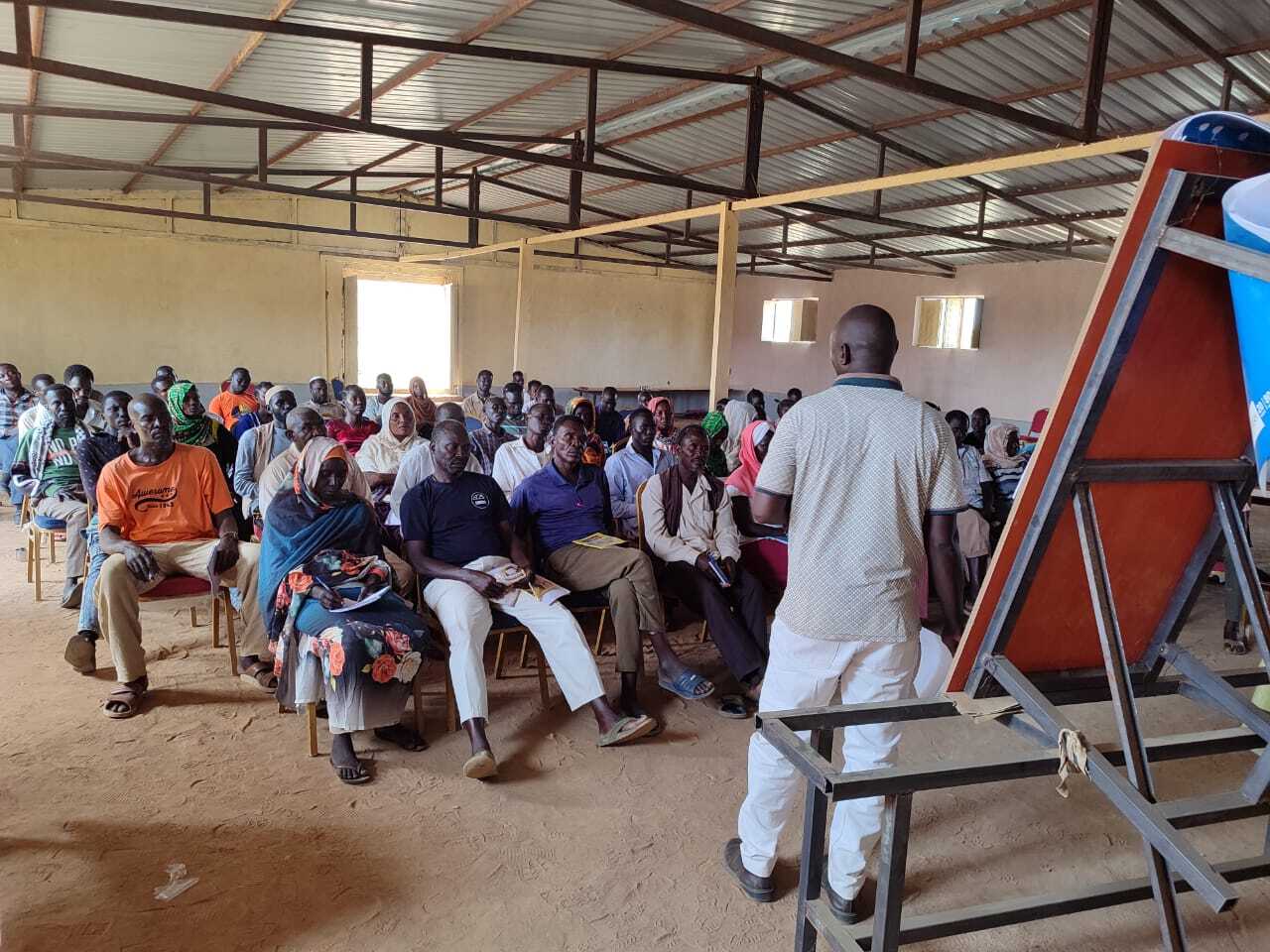
In South and West Kordofan, seasonal migration of Arab nomadic cattle herders, or pastoralists, has long caused tension as their herds encroached on Nuba farmland. While these dynamics had been managed effectively on a local level, forced proximity from the civil war has amplified historical grievances and the risk of violence.
In November, NP supported a four-day conference to address escalating tensions between pastoralist and farming communities, mobilizing 70 individuals—paramount chiefs, tribal chiefs, local organizations, and civil authorities—to formulate a comprehensive Reconciliation and Peaceful Coexistence Agreement. As the agreement was formalized, NP monitored the ceasefire and recorded zero violence for the first time in over 10 years.
Interrupting Cycles of Violence
Before violence forced Amal* and thousands of others to flee El Fasher for Tawila, she was one of 120 women trained in Zamzam camp as part of a Women Protection Team. After being scattered by war, Amal shared: “We didn’t stop when we were displaced. We are still here, and we are still protecting each other.”
Adapting to Crisis
Quickly, these women reconnected and adapted what they knew to the challenges before them in Tawila. Amal and her peers organized confidential referrals for survivors of sexual violence, identified separated and unaccompanied children, provided psychological first aid, and connected displaced families to the limited services that remained.
Meet Moses—NP's first partner in South Sudan and the reason NP originally started work in the country. As an NGO founder on the frontlines, he saw firsthand what protection could look like when communities lead it themselves. Today, Moses coordinates South Sudan's UCP/A Community of Practice. Central to it are Community Protection Teams—community-led groups trained by NP that put that protection into practice on the ground.
Community protection teams shift power
SOUTH SUDAN
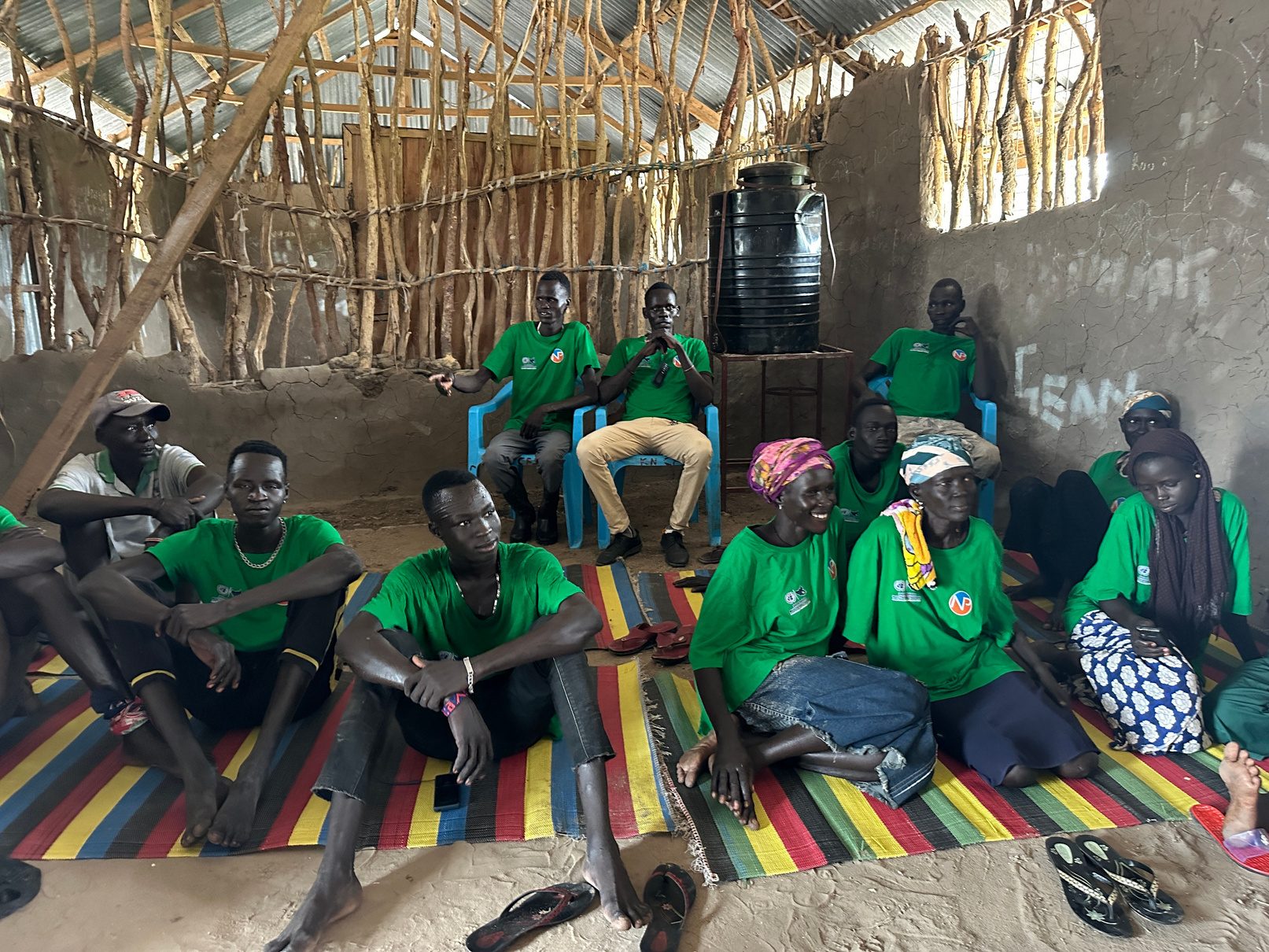
When women and children were being abducted traveling between counties in Jonglei, the community didn't wait for outside intervention. Working with NP, elders, women, and youth mapped the hotspots — water points, market routes, village edges — and built a rotating patrol system to cover them. Abductions dropped from three a month to zero.
Safety is Built,
Not Waited For
In Pibor, generational rivalries had escalated from sticks to guns — and a dispute in the market could spiral into deadly violence within hours. NP brought youth from competing age groups into the same room, then the same team. They mapped risks, mediated disputes, and in July 2024 helped broker a community agreement declaring Pibor a weapon-free zone. One year later, the agreement holds.
Peace is Something You Practice
Double-click to select video
When women
"
Mary, EWER Committee member
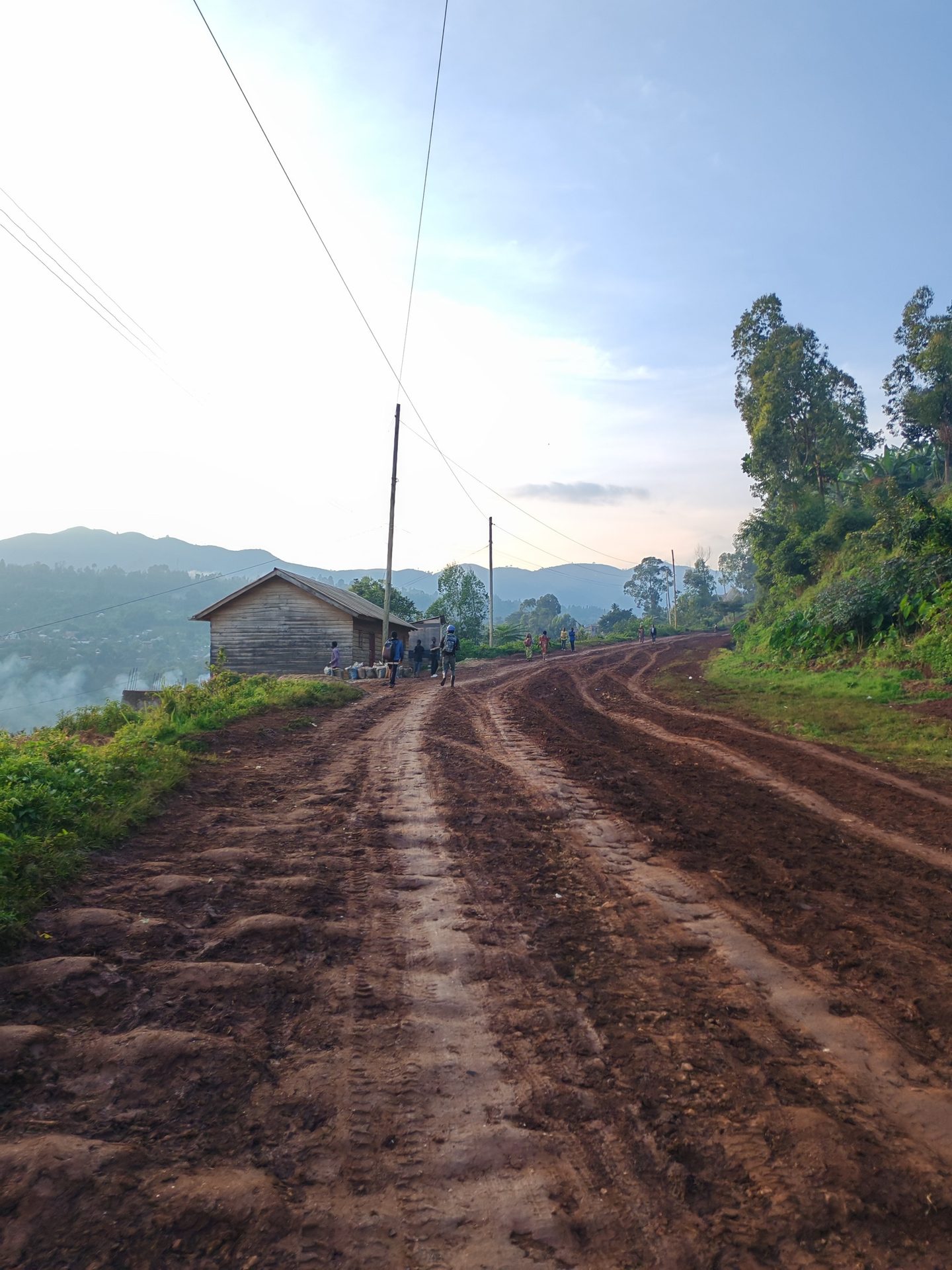
Eastern DRC in 2025 has been defined by upheaval: armed groups advancing, state forces retreating, families fleeing with what they could carry. Still, people organized for one another. Women shared security updates at morning prayers. Men walked each other's families to water sources. A restaurant owner mapped safer supply routes through her phone contacts.
This was NP's first full year in the DRC. We didn't arrive with ready-made solutions, we arrived where communities had been protecting each other for a long time — and had to keep doing it with or without outside support. Our role was to listen to what's already working, and ask how to make it stronger.
Early warning, early response networks shift power
DEMOCRATIC REPUBLIC OF CONGO
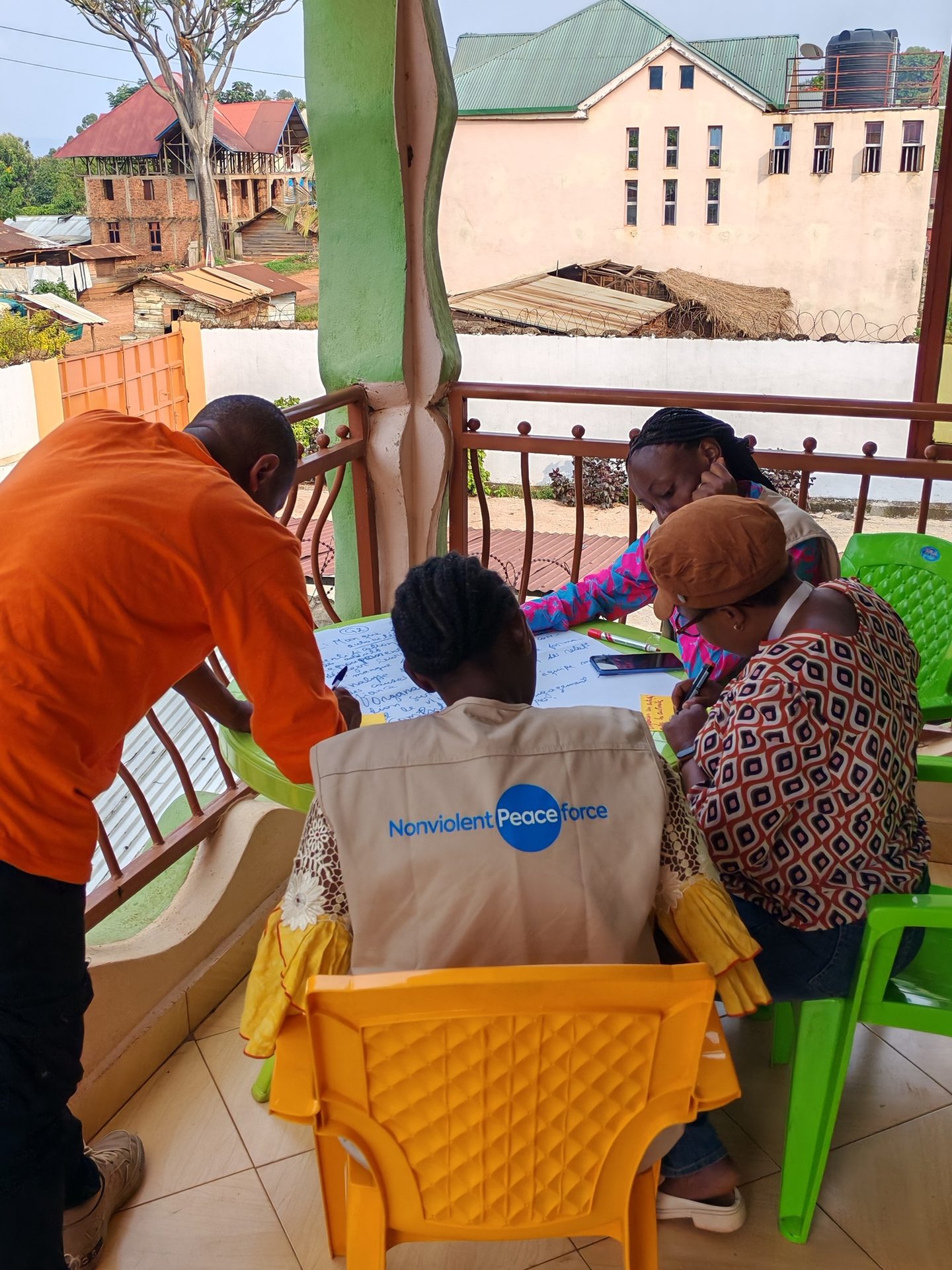
When fighting disrupted her restaurant in Kalehe, Furaha adapted. The women who supplied her stopped coming—the routes felt too dangerous. So she started calling them, arranging meetings in discreet places, and mapping routes around armed group movements.
What grew from an effort to keep her restaurant function, is now a community-led early warning system, built through texts, phone calls, and whispered updates at prayer gatherings. NP worked with Furaha, offering risk analysis tools, ensuring the most at-risk aren't left outside existing networks, and connecting community voices to humanitarian spaces where decisions get made.
Strengthening Furaha's Network
1,734
community members reached through 16 patrols
In Ukraine, the threat landscape shifts faster than any single organization can track. Drones circle above evacuation routes. Frontlines shift across whole cities. And yet, local humanitarians stay. They bake bread for each other, coordinate evacuations, repair shelled homes, and find ways to keep the most at-risk connected to safety. NP's role in Ukraine is to work alongside these people: strengthening what they're already building, resourcing what they've told us they need, and holding space for the human cost of doing this work day after day. From frontline evacuations to trauma support for veterans and communities, we show up where the space is narrow and stay for the long haul.
Championing partners shifts power
UKRAINE
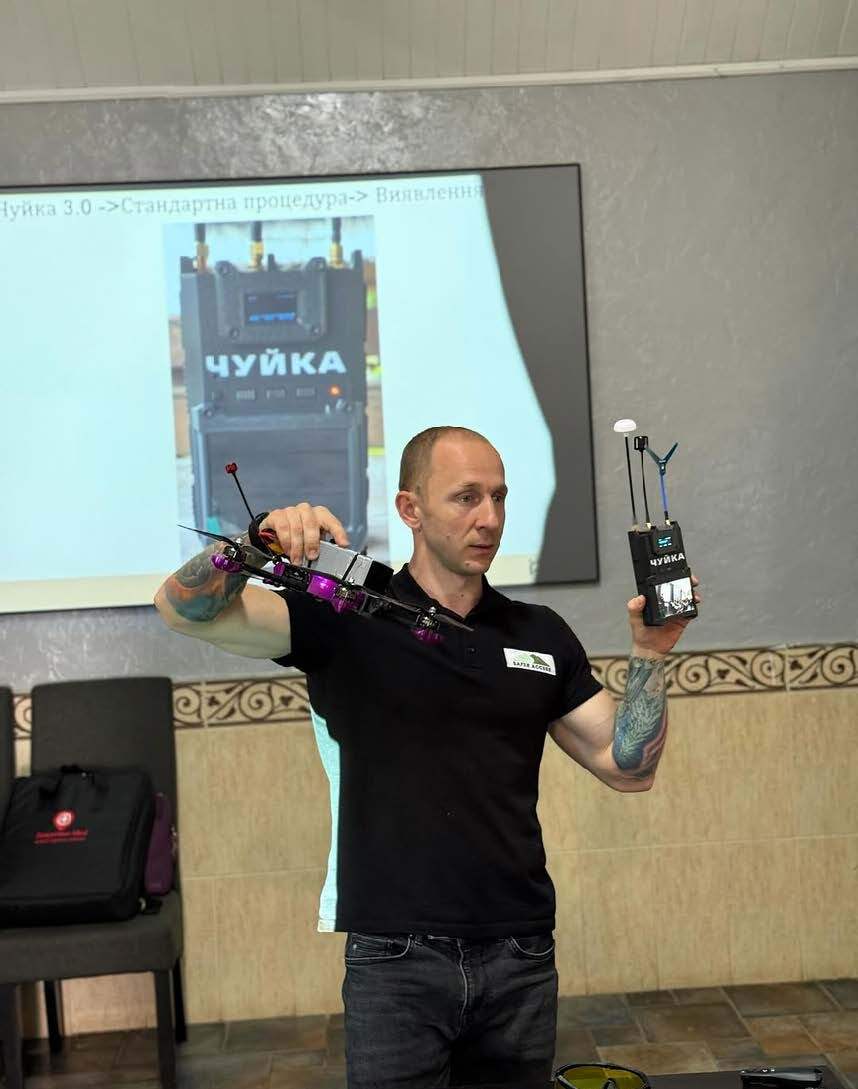
113
local responders underwent training in safe behavior in environments with extreme drone threats
271
local humanitarians benefitted from psychological support sessions through the Volunteer Resilience Programme
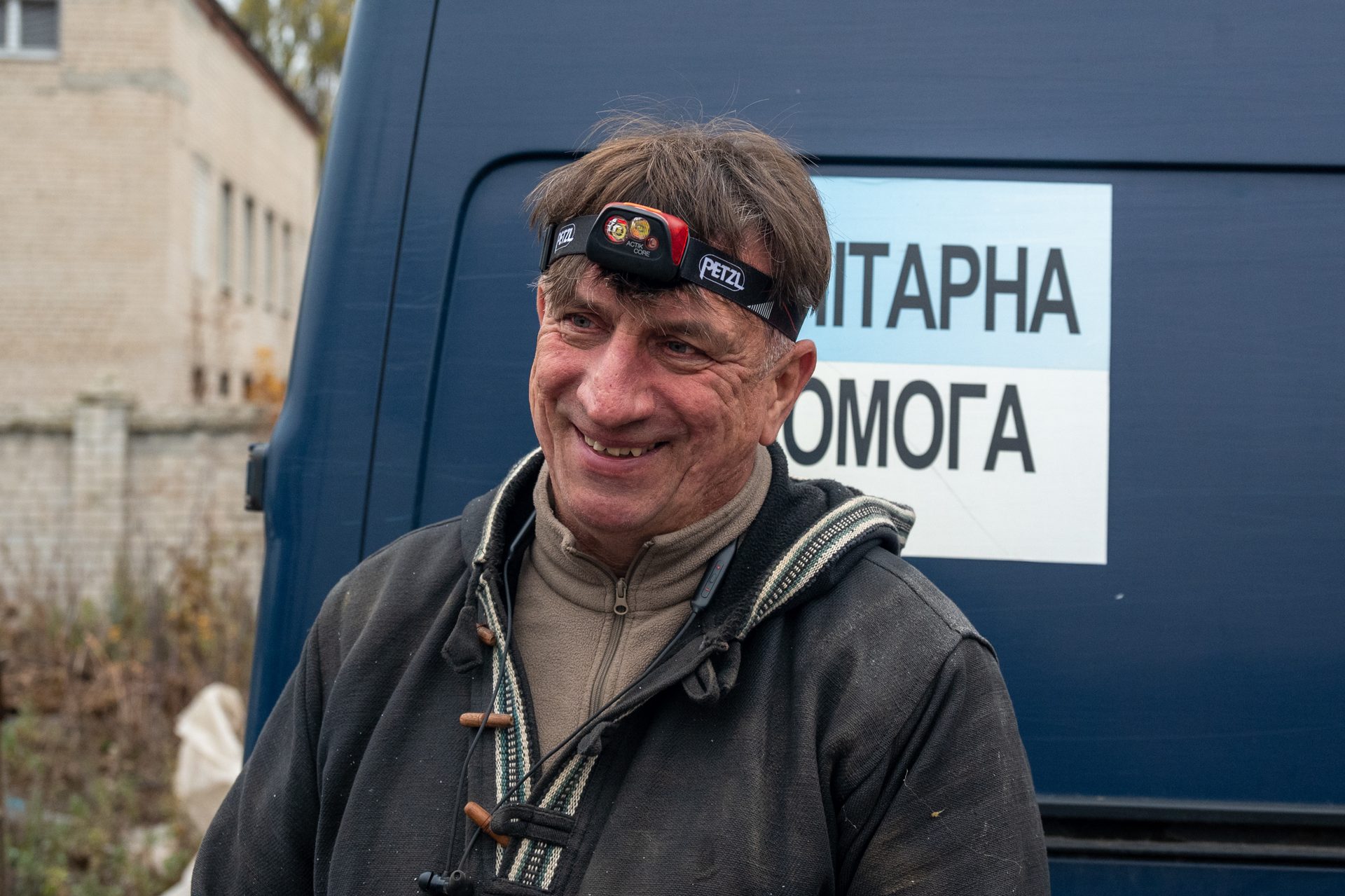
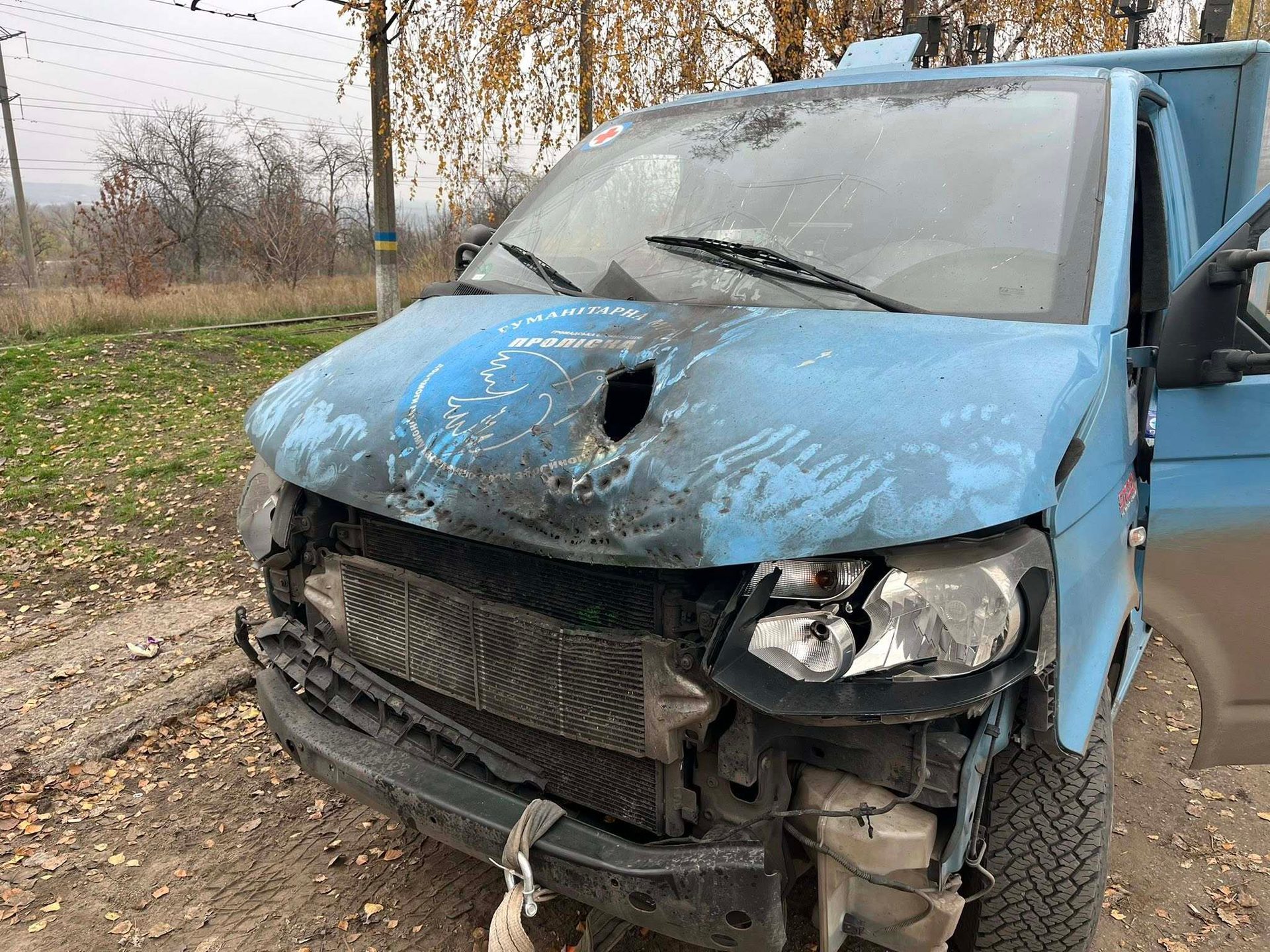
One November morning, Oleh's convoy set out toward frontline villages to evacuate a family. Before they made it, a drone struck the vehicle head-on. Luckily, the explosive didn't detonate inside, and everyone walked away. The convoy went back for the damaged van the next day. Another drone flew overhead while they were there. For Oleh, who has evacuated four times himself and is preparing for a fifth, none of this is reason to stop. "You can always return," he says, "but only if there's still someone left to return to."
Oleh Tkachenko has been rebuilding since 2014 — first as a chaplain in Slovyansk, then as a baker in Maryinka, then Pokrovsk. Each time the frontline caught up, he packed what he could and moved. At the end of 2024, when Russian forces closed to within kilometers of his Pokrovsk bakery, NP partner Koridor UA helped him evacuate across three trips. Days after arriving back in Slovyansk — the city where it all started — the bakery was running again. He also helped evacuate thousands of civilians from Vuhledar before it fell. Bread, evacuations, presence — whatever the moment calls for, Oleh is there.
Evacuations From the Frontlines
Oleh's Story
Building an Ecosystem that Protects
Through our STEEL project—Safe Transport for Evacuation and Emergency Logistics—we train volunteers to do one of the most dangerous jobs in Ukraine: reaching civilians within 10 kilometers of the frontline and bringing them out alive. In one year, consortium crews completed 193 missions and evacuated 1,083 people across Kharkiv, Donetsk, Dnipropetrovsk, and Sumy regions. Behind every number is a person who made it out.
Innovation in the Face of Danger
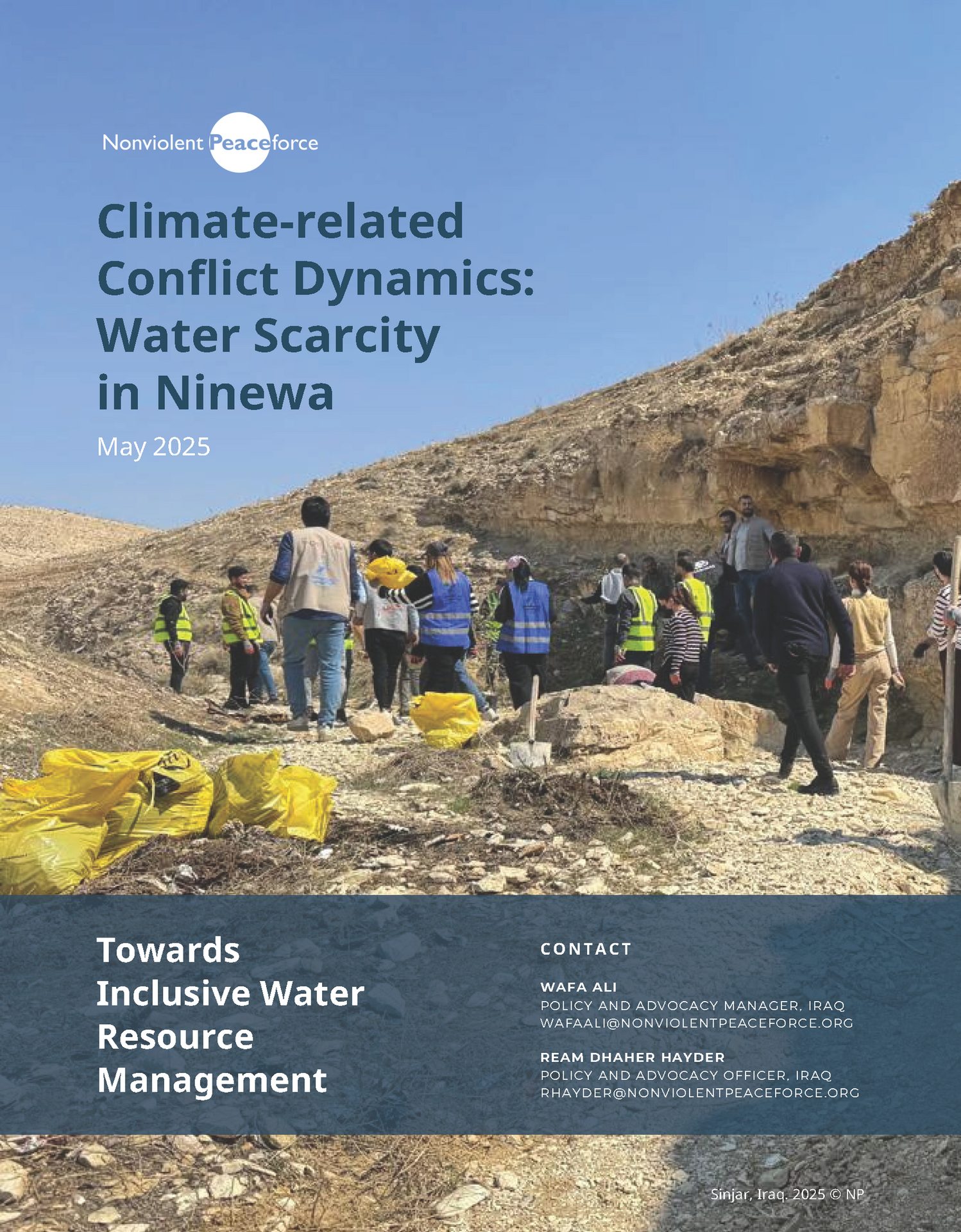
Iraq doesn't sit still. Tensions between communities flare and ease and flare again. The ground that felt stable last year looks different today. In that environment, NP's work is about being present through the changes — building the relationships and structures that hold when everything else is in flux.
Presence Through Uncertainty
IRAQ
When families returned to Qaylan after years in displacement camps, they found their schools still occupied by police who had no intention of leaving. Children were walking over 30 minutes each way along unsafe roads, arriving at overcrowded classrooms in bad weather. Community members had raised the issue with authorities but nothing changed. So, NP supported the local Youth Peace Team to take it further — equipping them with tools, training, and the right contacts to make their case to the Education Department directly. They walked in, presented their concerns, and walked out with an official order for the police to vacate. One parent said it best: "We now have hope through advocacy."
Safety so that people can live normally
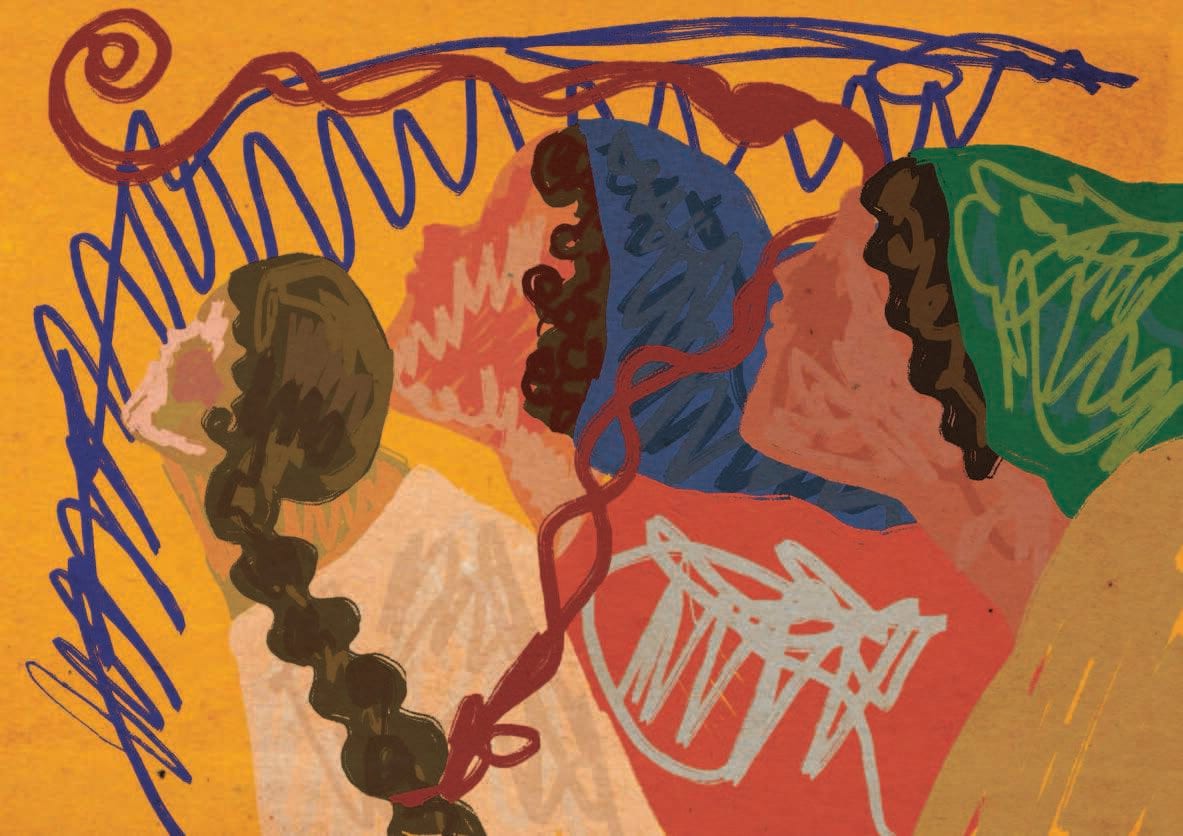
In Sinjar, the trauma of ISIS occupation didn't end when the fighting did. Roads were destroyed, wells had run dry, and tensions between communities were still raw. When the Women Peace Team identified the officials who controlled essential services, they learned those officials were 130 kilometers away in Mosul. Cultural norms discouraged women from traveling or engaging in public spaces. They went anyway. They met with the Mayor of Sinjar, followed up with departments in Mosul, and kept pushing until road repairs and water restoration were underway. "We were survivors and now we are leaders," said Zina. "We speak in peace and achieve the goal."
Safety so that peacebuilders can build
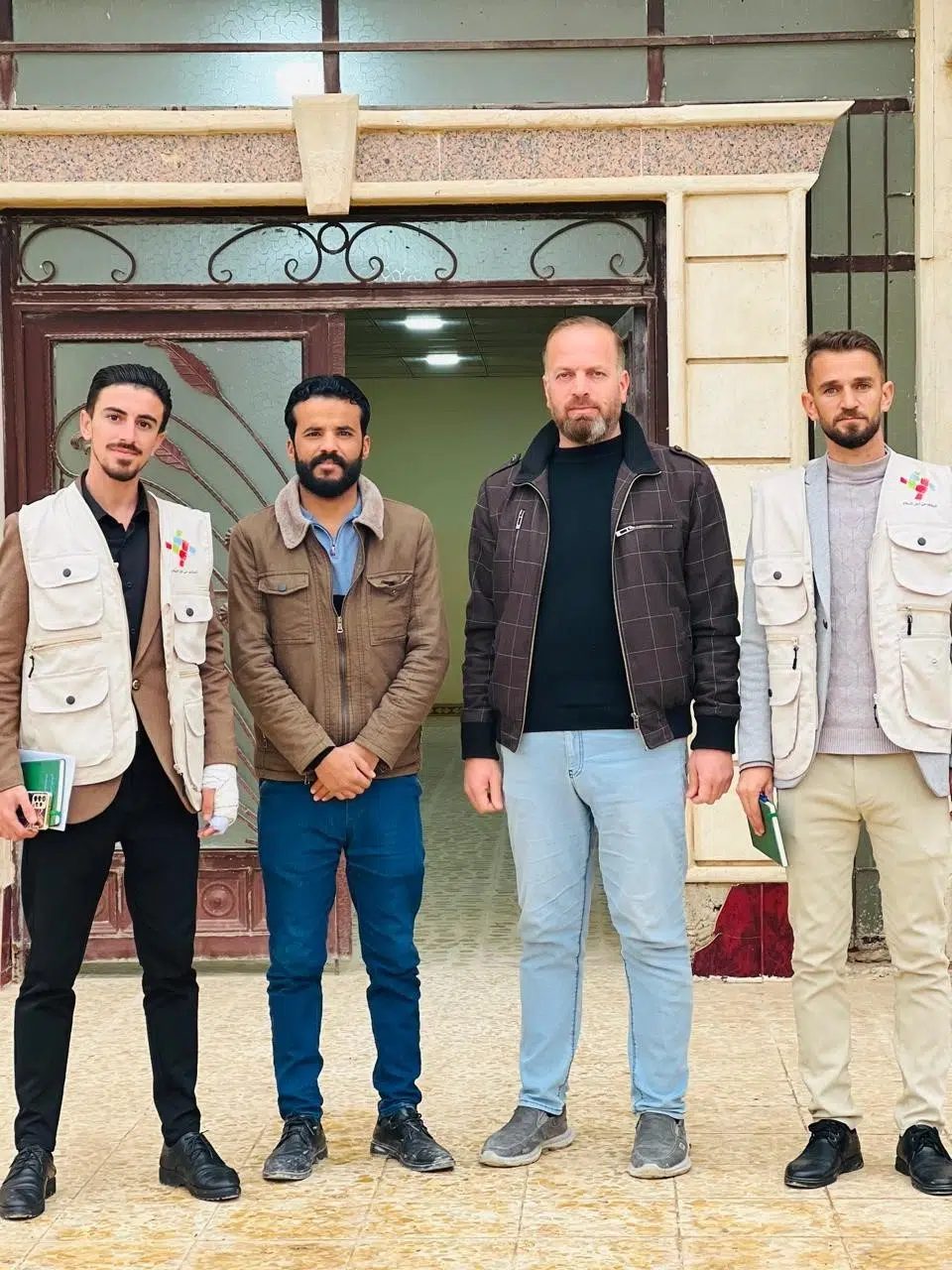
In partnership with Tech for Peace (T4P), an Iraqi technology organization, NP supported Youth Peace Teams (YPTs) in Sinjar to strengthen their digital engagement skills — helping them identify and report harmful content such as extremist material, hate speech, and sextortion. Together, YPTs and T4P worked to counter rumours and misinformation threatening social cohesion in the region.
Prevention of
online-offline violence
3
rumours with high potential to provoke violence or social tension identified and responded to
4.6M+
users reached through 63 fact-checking and rumour-response articles published together with T4P
Safety so that communities
can lead their own protection
Through our Women Peace Teams in Iraq, we train women displaced by conflict to lead nonviolent protection efforts in their own neighborhoods, from educating children to negotiating directly with armed actors on behalf of their communities. Rabiha, a Women Peace Team Leader in Zummar, Iraq and trained by NP, explains how her trainings based on nonviolence have guided her: when the army threatened to force families back from displacement within a week, she and other women intervened, turning a one-month deadline into ten months of breathing room for families to prepare. Behind every negotiation is a community that got to choose its own path forward.
Already fractured by civil war, civilian protection needs in Myanmar were exacerbated by the 7.7 magnitude earthquake that struck on March 28, killing thousands and destroying critical infrastructure, including safe shelter, water systems, bridges, and roads needed to access food and aid. As one of our team members shared, "People could not distinguish anymore if the ground was shaking from aftershocks or from an air strike."
For well over a decade, NP has protected communities in highly conflicted areas of the country, training people to spot early signs of violence and safely accompanying those fleeing. When the disaster struck, protection didn’t wait.
When Disaster Struck, Protection Was Ready
MYANMAR
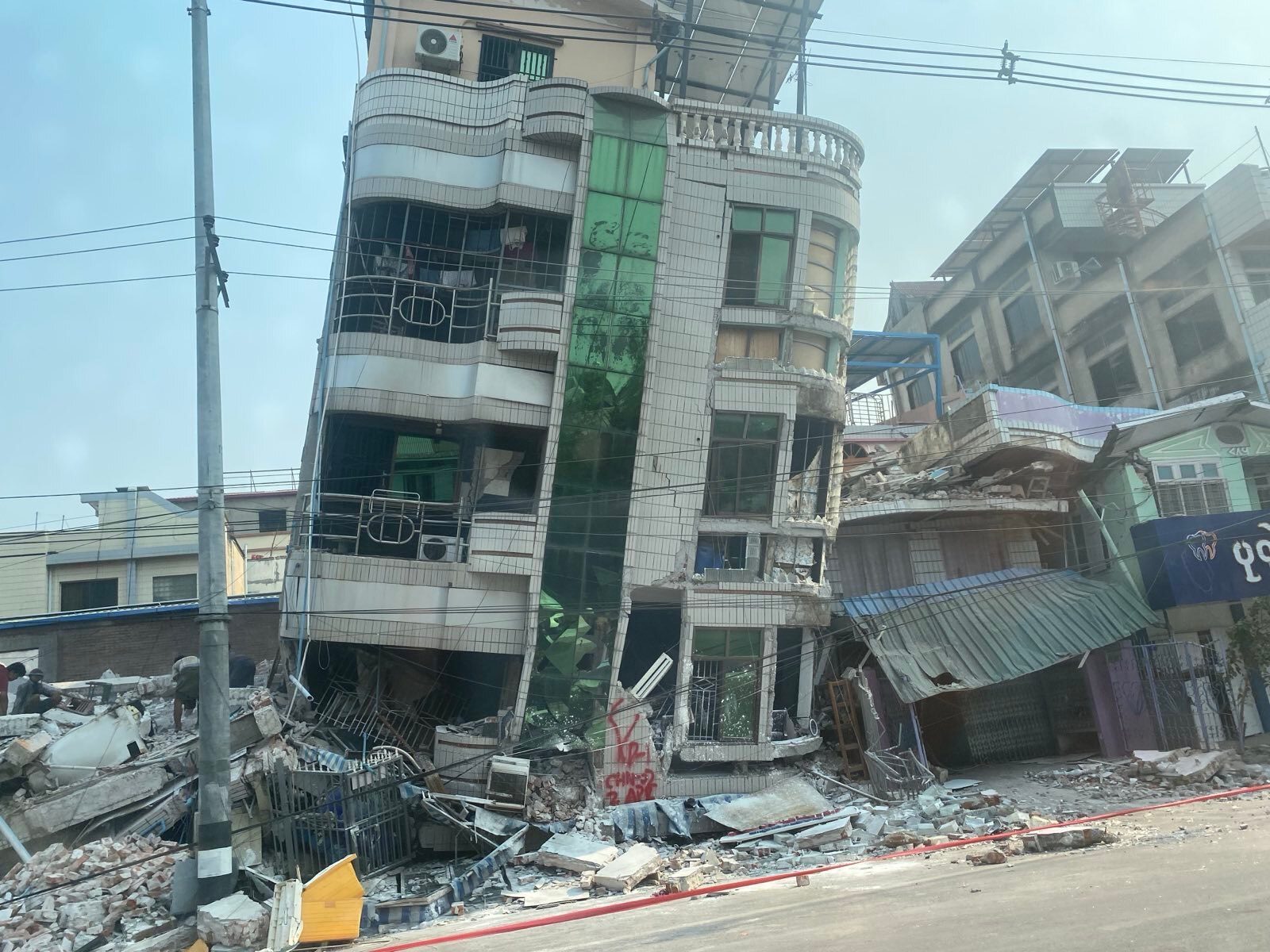
Within 72 hours of the deadly earthquake, NP was on the ground. The speed of that response was not accidental—it was the result of years of investment in relationships with trusted local partners, including women-led civil society organizations, volunteer Early Warning Early Response (EWER) networks, and faith leaders.
In the immediate aftermath, NP focused on the safety of both affected communities and first responders, ensuring aid was delivered safely, equitably, and in a way that prevents further harm or conflict.
Emergency Response
Access to many of the hardest-hit areas was severely limited, with checkpoints and damaged infrastructure blocking outside responders from reaching affected communities. But because of local relationships, NP’s team received real-time information from church leaders and EWER volunteers on which routes remained passable.
Local Networks in Action
In one case, the team traveled in an ambulance transporting deceased individuals—one of the only ways to reach isolated communities. Because of the strength of these local networks, life-saving response efforts were possible, and 1,200 people were relocated to safer areas.
To support community members as they navigate ongoing trauma from conflict and disaster, NP trained 40 local volunteers in psychological first aid and established three Safe Space Hubs in partnership with trusted faith-based institutions, providing safe, confidential spaces for psychosocial support and laying the foundation for longer-term community resilience and protection services. In just three months, 372 individuals were reached through 72 psychosocial support sessions.
Healing in Community
I can now
"
Safe Space Hub Volunteer
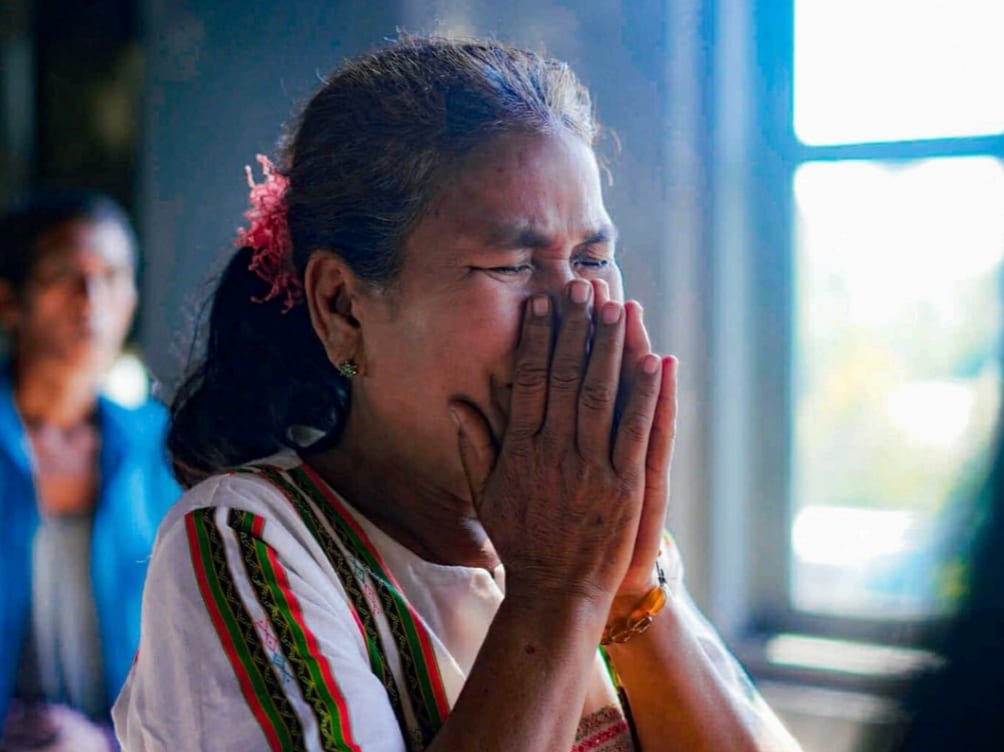
One of the Hub volunteers was herself was struggling with the loss of her father and younger sister within a short period. Her experience highlights that strengthening local volunteers' capacity to deliver psychosocial support not only equips them to help others but also their own healing and resilience.
NP has been part of the Bangsamoro peace process longer than most. When other organizations have moved on, we've stayed — to connect, ignite, and sustain. The work is about building the conditions for peace to take root: de-escalating the feuds that tear families apart, supporting communities to lay down their weapons, creating spaces where women and youth can participate in the decisions that shape their lives. Safety today, so that peace has room to grow tomorrow.
Building Lasting, Local Peace
PHILIPPINES
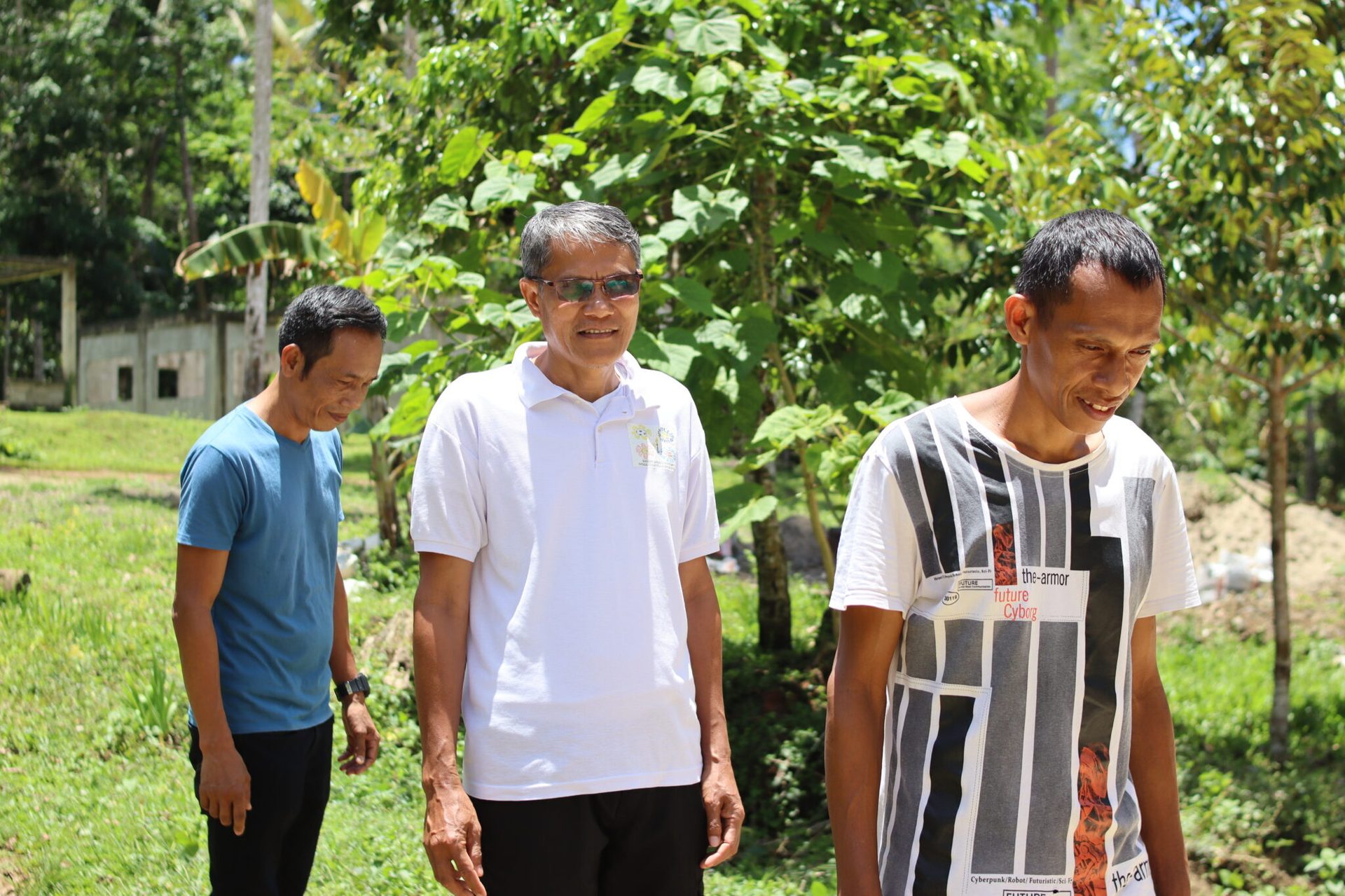
In Batu-Mapoteh, Basilan, roads were once muddy animal trails — unreachable, forgotten, a symptom of how little peace had taken hold. Abdul-Basar "Barad" Amad, a former teacher turned Early Warning/Early Response Monitor President, has spent years changing that. Trained by NP in Unarmed Civilian Protection, he has stepped between armed actors and civilians during active clashes, negotiated the release of two young men on the verge of being killed, and documented early warning signs that stopped a confrontation between two armed groups (Abu Sayyaf and MILF) from spiraling into violence.
His community now has roads, and they got there by choosing nonviolence first. "Peace comes before development," Barad says. “NP isn't just here to teach—they are with us."
Safety for Today
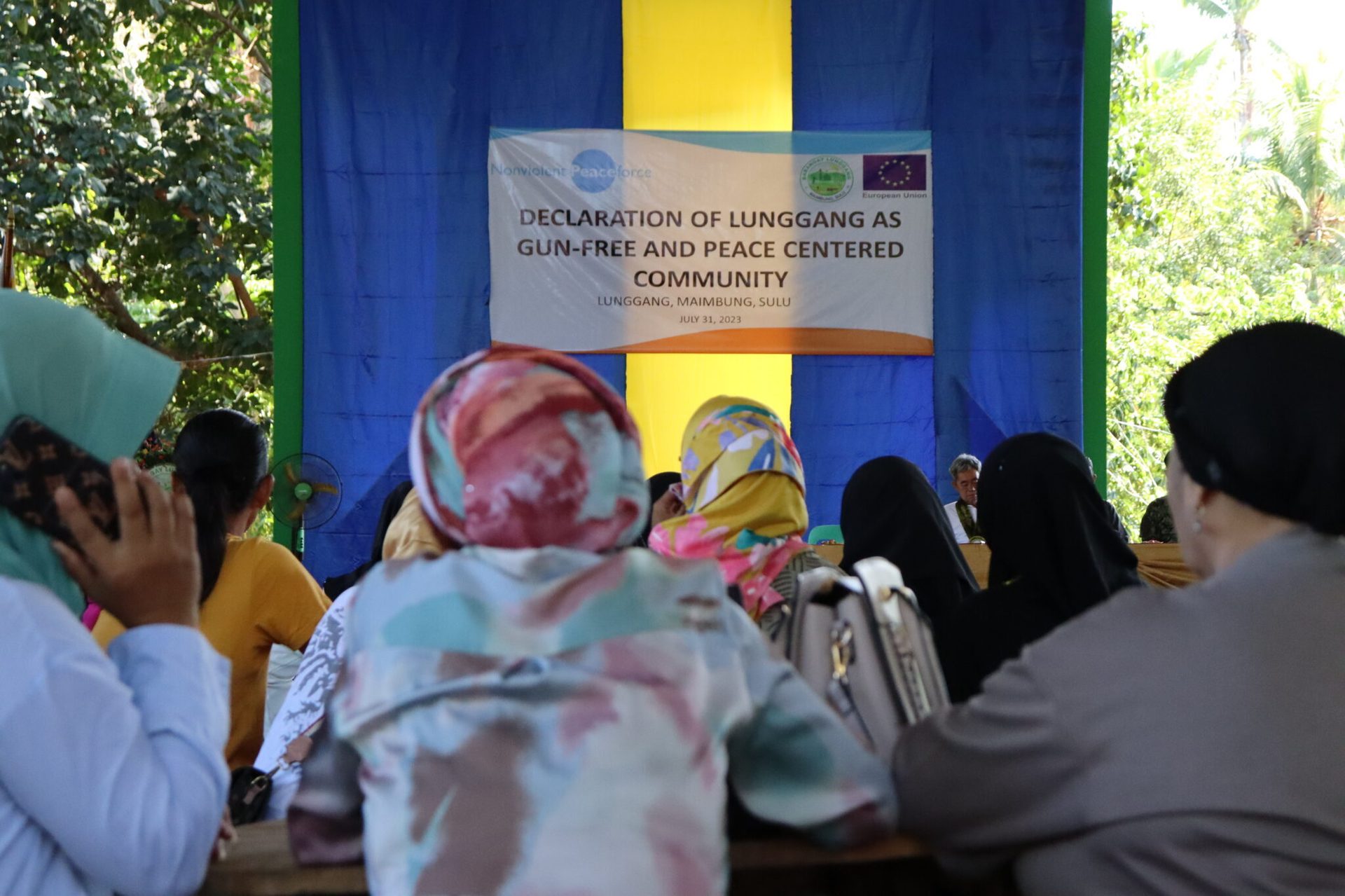
In Lunggang, Sulu, firearms had long been a fact of life—rooted in survival, resistance, and fear. Ambuh Mhar, local chairwoman, had a different vision. Through NP-facilitated community meetings, she asked her neighbors a simple question: what would it take to become gun-free? The answer took three years to build—a formal Gun-Free Zone Plan, buy-in from local leaders, religious authorities, the army, national police, and a community-wide commitment to choosing safety over arms. Lunggang is now the first officially recognized gun-free barangay in Sulu. And it isn't alone—there are now 47 gun-free barangays across the Bangsamoro region, and counting.
Peace for Tomorrow
Safety isn't only about the absence of violence, it also is about having somewhere to go. We launched a new project in December, building women-friendly spaces across the Bangsamoro region — so that women and youth have a place to be heard, supported, and part of what comes next.
In the wake of violence connected to extreme ideologies, communities across Indonesia have grappled with how to restore trust, repair divides, and move forward together collectively. One community in Bima, Rato village, is working to demonstrate that repair is possible and that former combatants can become leaders for peace.
A local archery club, the Silla Archery Society (SAS), faced deep stigma in Bima after several members were arrested on terrorism-related charges. NP engaged with SAS, community leaders, and locals to create safe, positive opportunities to engage with each other. These activities became the building blocks to restore relationships and trust across Bima. NP also connected former combatants with the mental health and employment support necessary to positively reintegrate into society.
After the initial trust building, SAS was able to open its
Protection Brings Communities Together Again
INDONESIA
activities to the public and membership grew to include people from across the community. Members began to work together on a new phase of rehabilitation. They meet regularly to discuss and manage challenges in Bima, including the reintegration of ex-combatants. Recently, this has grown to include a peace village initiative, in which SAS is one of multiple community actors, including police, women, youth, and religious leaders, who have come together to advocate for and assert the right to the safety of women and children in the area. Collectively, SAS and others are raising expectations of protection and safety.
The head of Rato village, Ahmadi, reflected on the changes that they had observed: “I was strongly opposed to SAS. But after the work of NP and partners, the relationship has changed.” Speaking to an ex-combatant, the village leader was clear: “I’m now confident – you are not my enemy, you are part of my community.”
Rising political and identity-based violence continues to threaten marginalized communities and social justice advocates across the United States. When people do not feel safe, they often avoid public spaces to reduce the risk of harassment, violence, or detention. As a result, communities become less connected, less engaged, and less able to influence decisions that affect their lives.
In 2025, NP collaborated with local partners nationwide to strengthen community-led protection efforts, helping people exercise their rights, support one another, and respond to emerging threats without fear.
Protection Makes Participation Possible
UNITED STATES
I was actually worried about coming here today. While I was really excited to participate in the march, I was also scared for my safety... It was so relieving to see the NP safety team—I could see how alert, organized, and invested they were in keeping everyone safe. Knowing that NP was there made me feel a lot safer and allowed me to be more present at the march without worrying.
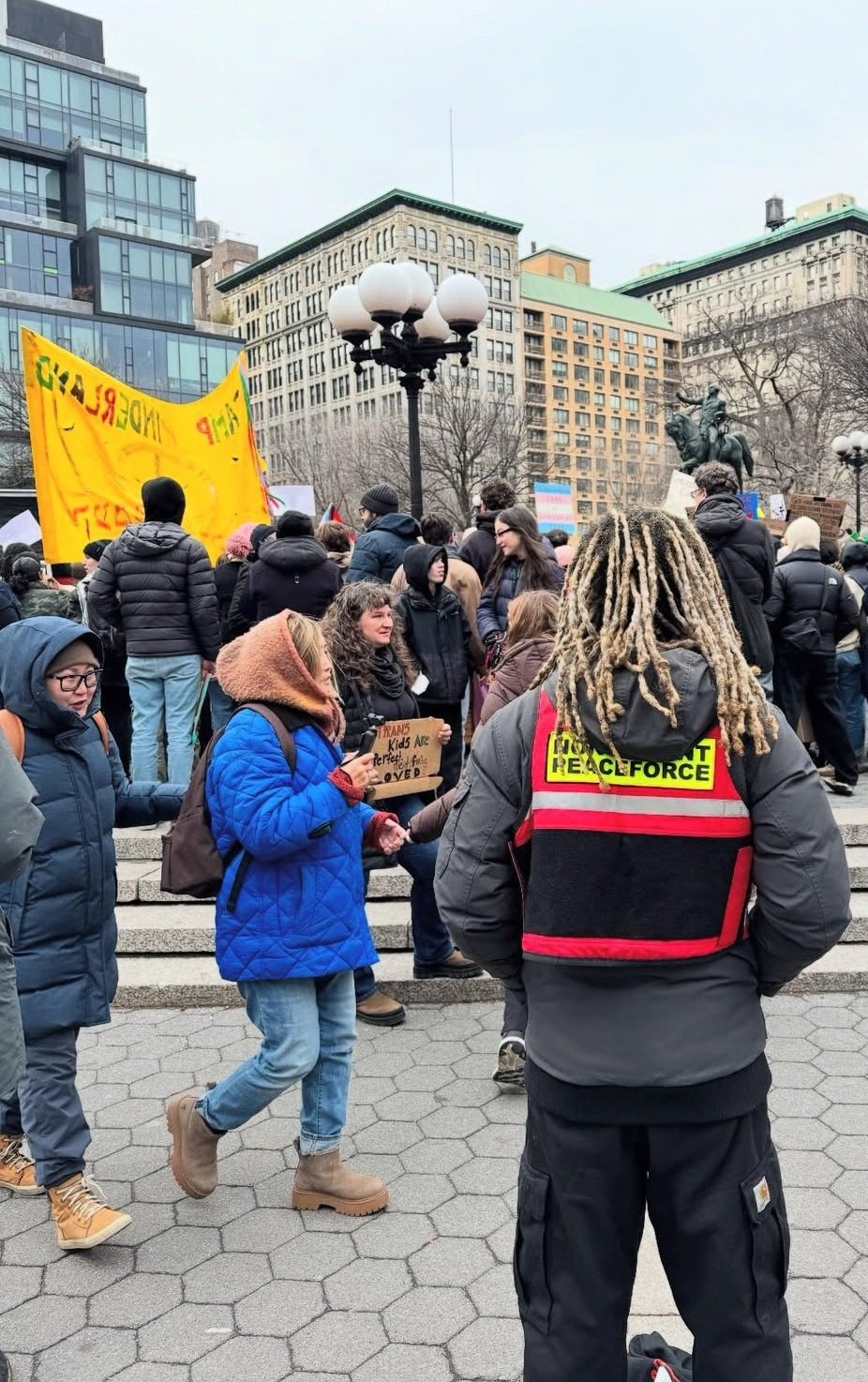
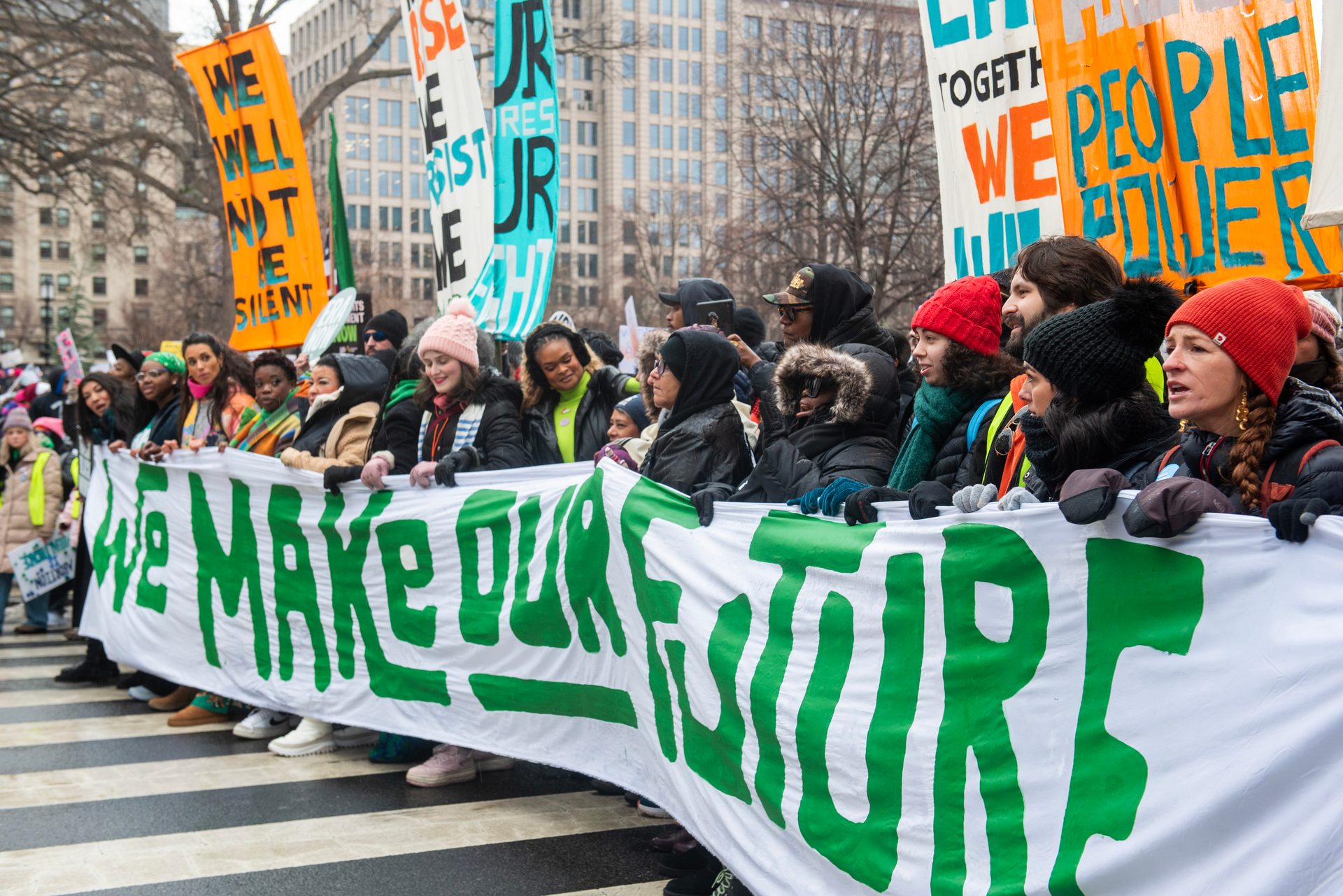
Public gatherings are essential for civic participation. Yet for many communities, growing tensions and security concerns have made these spaces unsafe. Starting in January at the People’s March, NP trained and supported volunteers in utilizing nonviolent tools and strategies, and helped local organizations build their own safety teams and protocols. This safeguarded more than 70,000 people at marches, demonstrations, and civic events throughout the year, ensuring they could organize, exercise their rights, and express dissent without harm.
Protecting Civic Space
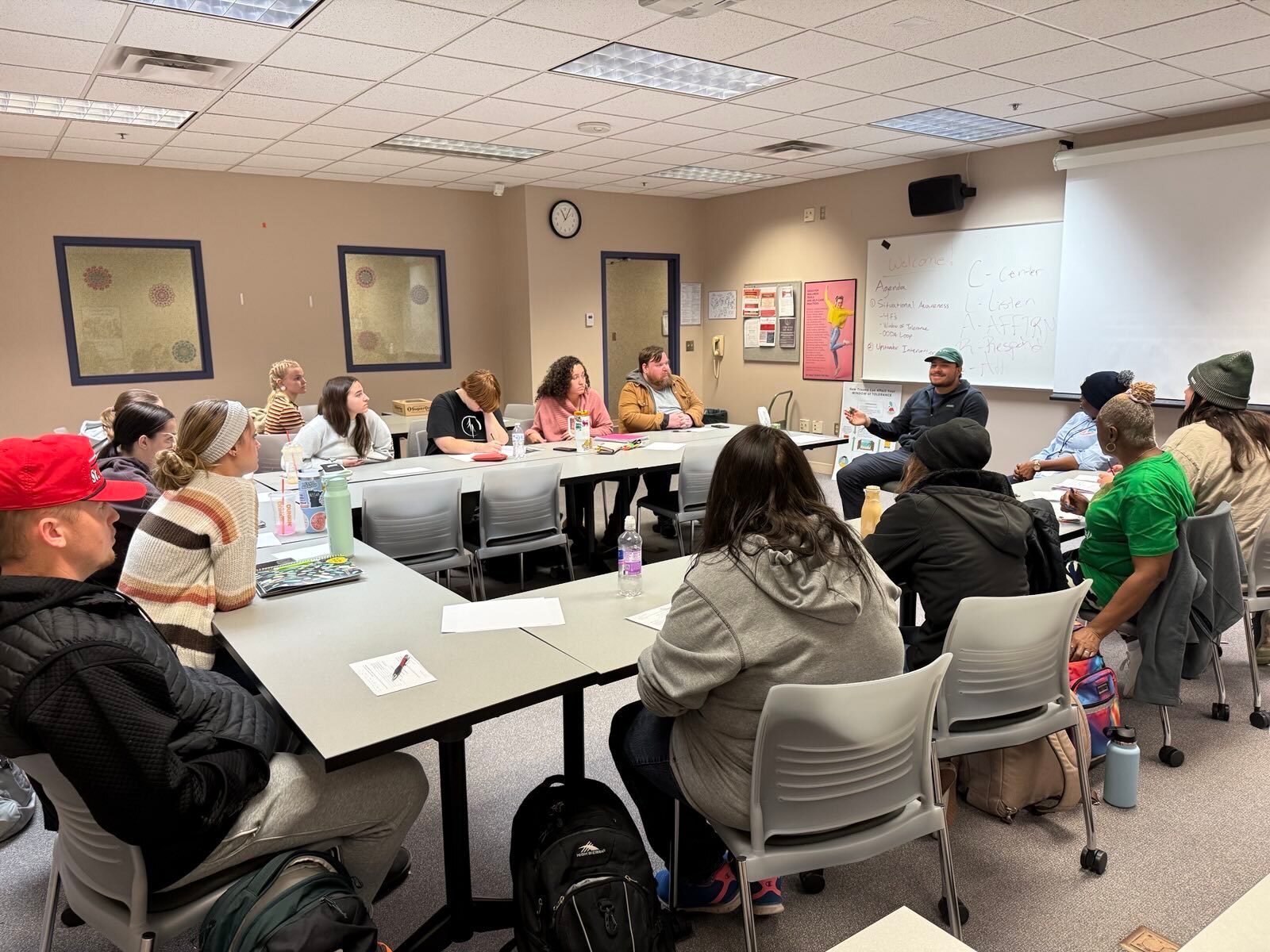
Cvilian protection requires strong local ecosystems and infrastructure. NP worked with over 40 community-based organizations across the country to strengthen local capacity to de-escalate, coordinate responses, and support one another, reaching 7,000+ community members in San Diego, New York, and Minneapolis.
From rural Minnesota communities creating local safety plans to neighborhood-based initiatives in New York City that strengthened solidarity across diverse communities, local leaders demonstrated that community-led responses are not only possible—they are effective.
Strengthening Community Safety Ecosystems & Infrastructure
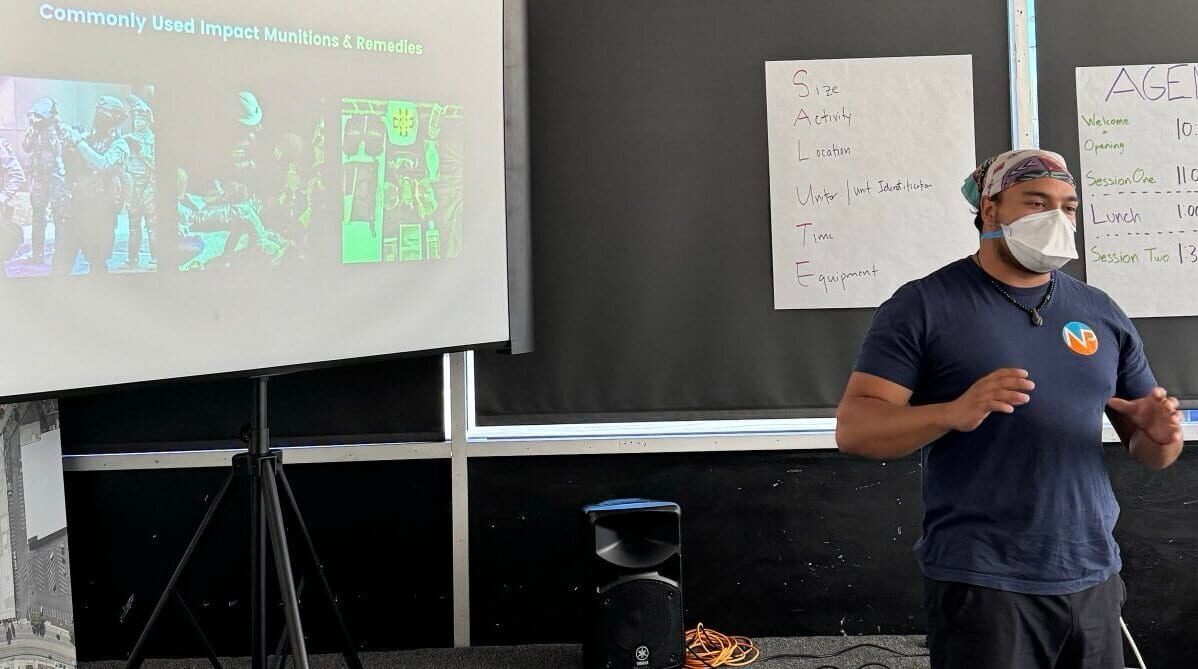
In 2025, NP supported more than 40 community patrols and over 20 court accompaniments, helping families and communities facing increased threats related to immigration enforcement move in public with greater safety and confidence.
"Nonviolent Peaceforce is present with immigrants and their families in and around courts so that people know their rights, that they feel less alone, and have observers in the room when harmful practices occur," said Roz Lee, NP U.S. Head of Mission.
Increased Safety for Communities Most Vulnerable
"
Cheyanne, People’s March participant
Since the early days of the war, the humanitarian response in Ukraine has been defined by local volunteer leadership—often stepping in where international actors won’t. In 2024, NP remained on the ground, connecting local needs to resources and amplifying the work of grassroots volunteer networks.
creative solidarity shifts power
ukraine
Evacuations from the Frontlines
Oleh's Story
Lorem ipsum dolor sit amet, consectetur adipiscing elit. Morbi in tellus in sapien vestibulum condimentum. Donec iaculis accumsan massa, sit amet dictum odio hendrerit quis.
Heading 2
Lorem ipsum dolor sit amet, consectetur adipiscing elit. Morbi in tellus in sapien vestibulum condimentum. Donec iaculis accumsan massa, sit amet dictum odio hendrerit quis.
Supporting the Ecosystem that Protects
Innovation in the Face of Danger
Early Warning, Early Response
philippines
In Mindanao, peace is more than a long-term goal—it’s a daily choice, built by communities working together to prevent violence before it starts. NP supports a growing network of community leaders, women’s groups, and local authorities who are transforming their villages into safer places—by spotting risks early and responding as a collective.
Husseina is the daughter of a former commander—and the president of her community’s Early Warning Early Response network. Her work often means stepping in before violence escalates: mediating conflicts, stopping harmful rumors, and quite literally climbing mountains to assess threats. In one instance, she rode on horseback to investigate reports of armed group activity. Upon learning the reports weren’t true, she was able to prevent an unnecessary displacement of villagers.
Her story shows what’s possible when women lead in peacebuilding. “As a woman, I can go places men often can’t during conflict. I can listen to the quiet threats and act early.” With NP’s training and coordination support, women like Husseina are building everyday peace—and showing that prevention is protection.
Women at the Frontlines of Prevention
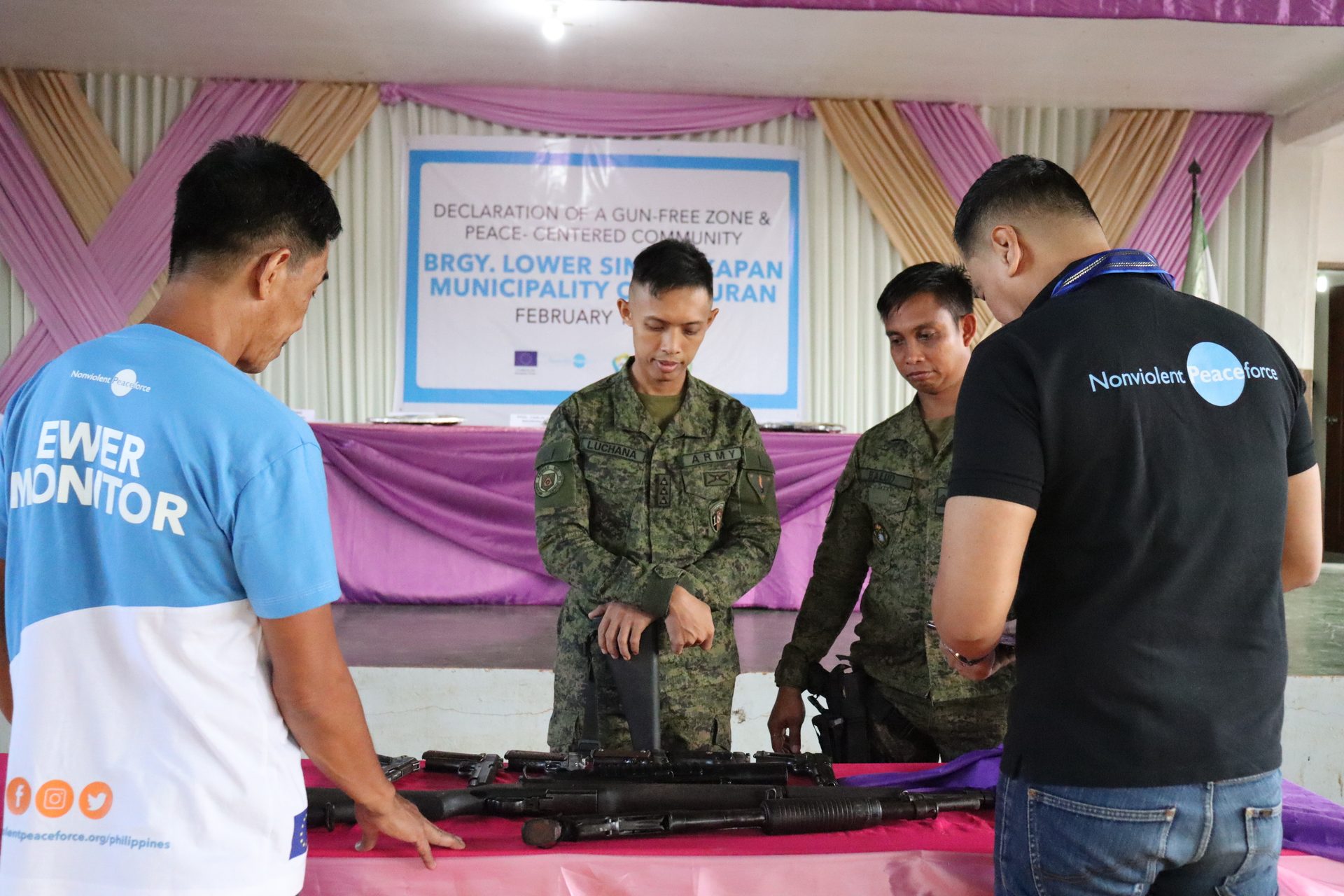
In Lower Sinangkapan, a village long plagued by armed violence, gunfire used to erupt without warning. But in 2024, the village made history by declaring itself the first gun-free zone in Basilan. The movement was sparked by local women, whose calls for safety inspired broader action. Backed by the leadership of the village Chairman Halim Saharinr—and support from NP and the local government—residents voluntarily turned in illicit firearms, trading them for peace and new livelihoods.
This community-led disarmament didn’t happen overnight. It was the result of years of trust-building, training, and coordination. As Chairman Halim put it, “The resolve to fight for what is right got even stronger when I met one of NP’s staff." Together, we created an ordinance to prohibit unauthorized firearms and help youth choose peace.
From Conflict Zone to Gun-Free Community
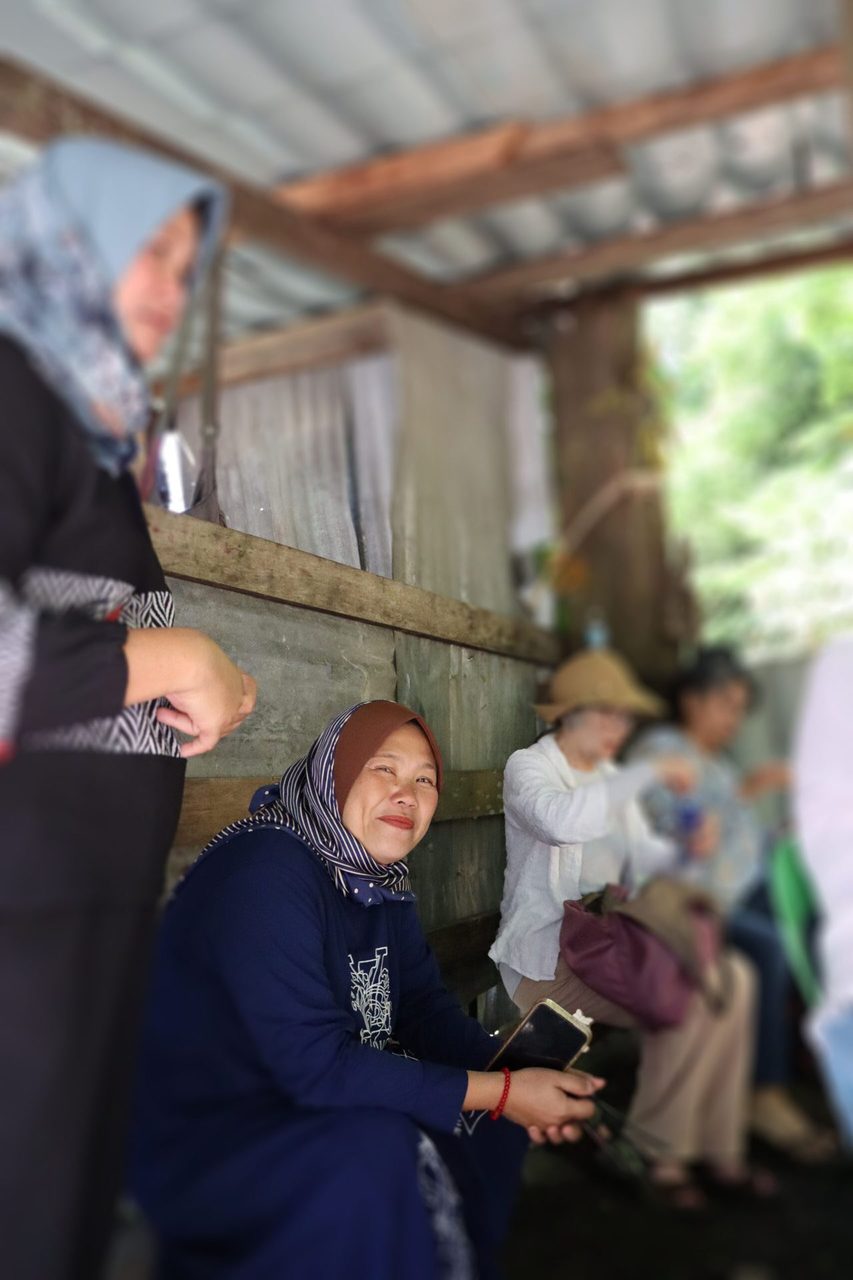
Husseina. Bulubudtua Falls, April 2024. ©NP
Lower Sinangkapan. February 2024.
©NP/Denise Rafaeli Cadorniga
Lorem ipsum dolor sit amet, consectetur adipiscing elit. Morbi in tellus in sapien vestibulum condimentum. Donec iaculis accumsan massa, sit amet dictum odio hendrerit quis.
Lorem ipsum dolor sit amet, consectetur adipiscing elit. Morbi in tellus in sapien vestibulum condimentum. Donec iaculis accumsan massa, sit amet dictum odio hendrerit quis.
Lorem ipsum dolor sit amet, consectetur adipiscing elit. Morbi in tellus in sapien vestibulum condimentum. Donec iaculis accumsan massa, sit amet dictum odio hendrerit quis.
The People Behind
the Protection
"NP is more than a workplace for me. It is a way of life. NP's values and methodology have taught me how to navigate many of the challenges I face as members of our communities and, personally, as a woman. It has reshaped the way I see conflict, build relationships, and support others. My journey at NP has not only helped me grow as a professional but has also contributed to my personal growth and the person I strive to be."
Dunya Blbas, Iraq
"What I value the most being part of NP team is the people. I admire the courage, dedication, compassion and teamwork. The supportive environment that encourages you to do your best every day. It's rewarding to be part of a team that work together to safeguard human lives and make peace tangible in every home..."
Daphne Macatimbol, Myanmar
Behind every outcome in this report is a staff member who has grown into their role — whether they've worked across multiple countries, phases of conflict, and years, or they're new and ready to learn and take advantage of the learning and development opportunities we offer.
investing in our people
Our commitment to learning and development isn't only programmatic — it's internal, too. This has led to significant progress inareas such as staff wellness and psychosocial support, and training opportunities that help our people grow. We take that seriously: our people are the foundation of every outcome in this report, and their growth is inseparable from our impact.
Tiffany Easthom, Executive Director
Felicity Gray, Head Of Policy & Advocacy
Line Hempel, Group Finance & Operations Director
Rosemary Kabaki, Head Of Mission, South Sudan
Huibert Oldenhuis, Global Head Of Programming
Delsy Ronnie, Head Of Mission, Philippines & Regional Representative For Asia
Thiago Wolfer, Head Of Mission, Iraq
Gloria Jarrett Yatassaye, Head Of People, Culture, & HR
Anna Zaros, Director Of Advancement
Douce Namwezi, Head of Mission, DRC
Roz Lee, Head of Mission, U.S.
Felicity Gray, Head Of Policy & Advocacy
Line Hempel, Group Finance & Operations Director
Rosemary Kabaki, Head Of Mission, South Sudan
Huibert Oldenhuis, Global Head Of Programming
Delsy Ronnie, Head Of Mission, Philippines & Regional Representative For Asia
Thiago Wolfer, Head Of Mission, Iraq
Gloria Jarrett Yatassaye, Head Of People, Culture, & HR
Anna Zaros, Director Of Advancement
Douce Namwezi, Head of Mission, DRC
Roz Lee, Head of Mission, U.S.
Deepa Sureka, Board Chair, U.S.
Diah Kusumaningrum, Board Vice Chair, Indonesia
Dr. Chayanit Poonyarat, Board Secretary, Thailand
Dr. Moses Monday John, Board Treasurer, South Sudan
Diah Kusumaningrum, Board Vice Chair, Indonesia
Dr. Chayanit Poonyarat, Board Secretary, Thailand
Dr. Moses Monday John, Board Treasurer, South Sudan
Paleki Ayang, Board Member, South Sudan
Thomas Kurmann, Board Member, U.S.
Brian McLeod, Board Member, U.S.
Lucy Nusseibeh, Board Member, Palestine
Jonathan Rudy, Board Member, U.S.
Joanne Waage, Board Member, U.S.
Thomas Kurmann, Board Member, U.S.
Brian McLeod, Board Member, U.S.
Lucy Nusseibeh, Board Member, Palestine
Jonathan Rudy, Board Member, U.S.
Joanne Waage, Board Member, U.S.
How we engage on Gender, Peace, and Security →
Connecting practice
with internal culture

“My journey at NP has been one of continuous learning, professional growth, and a deepening commitment to supporting both our people and our mission. What I value most about being part of NP's team is the organization's genuine commitment to its people and its mission. NP has provided me with a supportive environment where I was trusted to learn, take on new challenges, and grow professionally. I also value the culture of collaboration, respect, and continuous learning, which has inspired me to always strive to improve and contribute meaningfully to both my colleagues and the communities we serve..”
- Freann Sharisse Austria, Philippines
Tiffany Easthom, Executive Director
Felicity Gray, Head Of Policy & Advocacy
Line Hempel, Finance & Operations Director
Rosemary Kabaki, Head Of Mission, South Sudan
Huibert Oldenhuis, Head Of Programming
Nic Pyatt, Interim Head Of Mission, Sudan
Delsy Ronnie, Head Of Mission, Philippines & Regional Representative For Asia
Tanya Walmsley, Head Of Mission, Ukraine
Thiago Wolfer, Head Of Mission, Iraq
Gloria Jarrett Yatassaye, Head Of People, Culture, & HR
Anna Zaros, Director Of Advancement
Marna Anderson, Head of Mission, U.S. (through Sept 2024)
Felicity Gray, Head Of Policy & Advocacy
Line Hempel, Finance & Operations Director
Rosemary Kabaki, Head Of Mission, South Sudan
Huibert Oldenhuis, Head Of Programming
Nic Pyatt, Interim Head Of Mission, Sudan
Delsy Ronnie, Head Of Mission, Philippines & Regional Representative For Asia
Tanya Walmsley, Head Of Mission, Ukraine
Thiago Wolfer, Head Of Mission, Iraq
Gloria Jarrett Yatassaye, Head Of People, Culture, & HR
Anna Zaros, Director Of Advancement
Marna Anderson, Head of Mission, U.S. (through Sept 2024)
Lucy Nusseibeh, Board Chair, Palestine
Deepa Sureka, Board Vice Chair, USA
Rachel Julian, Board Secretary, UK
Brian McLeod, Board Treasurer, USA
Deepa Sureka, Board Vice Chair, USA
Rachel Julian, Board Secretary, UK
Brian McLeod, Board Treasurer, USA
Jérôme Elie, Board Member, Switzerland
Meenakshi Gopinath, Board Member, India
Diah Kusumaningrum, Board Member, Indonesia
Thomas Kurmann, Board Member, USA
Francois Marchand, Board Member, France
Anna Matveeva, Board Member, UK
Tiffany Tool, Board Member, USA
Isaiah Kipegon Toroitich, Board Member, Switzerland
Gabriëlla Vogelaar, Board Member, Netherlands
Meenakshi Gopinath, Board Member, India
Diah Kusumaningrum, Board Member, Indonesia
Thomas Kurmann, Board Member, USA
Francois Marchand, Board Member, France
Anna Matveeva, Board Member, UK
Tiffany Tool, Board Member, USA
Isaiah Kipegon Toroitich, Board Member, Switzerland
Gabriëlla Vogelaar, Board Member, Netherlands
The People Behind the Protection
Expenses
Nonviolent Peaceforce is an international nongovernmental organization with the following legal entities:
• U.S. (501c3)
• Switzerland (Swiss Foundation)
• Belgium (AISBL)
• France (Association de loi 1901)
The financial statements cover a 12 month period (January 2024 - December 2024) and represent the combined revenue and expenses to provide a full picture and scope of our work. We conduct annual external audits for each program site as well as the legal entities in compliance with local requirements.
Financials
85% of your support went directly to protecting civilians: fueling frontline peace teams, community-led safety tools, and bold advocacy. The rest kept the lights on and the mission moving.
Funding
Global Audited Financials →
FINANCIALS
Nonviolent Peaceforce is an international nongovernmental organization with the following legal entities:
• U.S. (501c3)
• Switzerland (Swiss Foundation)
• Belgium (AISBL)
• France (Association de loi 1901)
The financial statements cover a 12 month period (January 2025 - December 2025) and represent the combined revenue and expenses to provide a full picture and scope of our work. We conduct annual external audits for each program site as well as the legal entities in compliance with local requirements.
Thank you for standing in solidarity with people affected by violence, and for helping to make protection – and the peace and possibility it enables – a reality around the world. Together, we are proving that when we invest in keeping people safe, everything else becomes possible.
As a nonprofit dedicated to unarmed civilian protection, we rely on diverse funding sources to be where we’re needed most—protecting civilians, training local peacebuilders, and fostering nonviolent solutions.
You can be a part of transforming the world's response to conflict by supporting us with your gift today.
Join Us with your gift
Your Support Powers Protection